Oxidized Bitumen for Automotive Undercarriage Sealant: Complete Guide, Grades & Application
Oxidized bitumen undercarriage sealant — also known as bitumen underbody coating or blown asphalt undercoating — is one of the most critical protective systems applied to modern vehicles. It protects the steel undercarriage, chassis, floor pan, and wheel arches from corrosion, stone chip damage, moisture infiltration, road salt attack, and noise — extending vehicle life and maintaining structural integrity over decades of use.
The global automotive underbody coating market was valued at USD 2.5 billion in 2025 and is projected to reach USD 4 billion by 2033, growing at a 6% CAGR (Data Insights Market, 2025). With global vehicle production reaching 96 million units in 2025, and over 58% of underbody coatings specifically designed for corrosion protection, oxidized bitumen remains the foundational raw material for the most cost-effective and proven underbody protection systems worldwide.
In this complete guide, RAHA Bitumen’s technical team explains everything about oxidized bitumen for automotive undercarriage sealant: formulation, application methods, grade selection, vehicle types covered, and how to choose the right material for your production or aftermarket needs.
Why Oxidized Bitumen Is the #1 Raw Material for Undercarriage Sealants
The vehicle undercarriage operates in one of the harshest environments of any automotive component. It is exposed to road water, mud, gravel impact, road salt (in winter climates), high temperatures near the exhaust system, constant vibration, and extreme temperature cycling between -40°C and +80°C. The undercarriage sealant must protect against all of these simultaneously — for the full service life of the vehicle.
Oxidized bitumen meets these demands through properties developed during the air-blowing oxidation process:
- Outstanding corrosion protection: Forms a continuous, impermeable barrier that isolates steel from moisture, oxygen, and corrosive ions (road salt chlorides, sulfates) — the three essential ingredients of steel corrosion.
- Excellent stone chip resistance: The elastic, semi-flexible nature of oxidized bitumen absorbs and dissipates the impact energy of road stones and gravel — preventing damage to the underlying steel and primer coats.
- High softening point (85°C–115°C): Prevents softening, flow, and sag in hot climates and near exhaust components, even in tropical environments where underbody temperatures can exceed 70°C.
- Wide temperature range flexibility: Remains flexible and crack-resistant at low temperatures (-20°C to -40°C) — critical for vehicles operating in cold climates where rigid coatings crack and allow corrosion ingress.
- Strong adhesion to steel and primer: Bonds firmly to e-coated (electrodeposition primed) and bare steel surfaces — essential for long-term coating integrity under vibration and thermal cycling.
- Sound and vibration damping: The dense, viscoelastic bitumen layer reduces road noise and structure-borne vibration transmitted through the floor pan — contributing to cabin NVH comfort.
- Chemical resistance: Resists road salt, water, oil, mild acids and bases — the full range of chemical exposures encountered in normal vehicle operation.
- Cost-effectiveness: Significantly lower raw material cost than rubber-based, wax-based, or polyurethane underbody systems — the primary reason bitumen remains dominant in OEM and aftermarket underbody protection globally.
Types of Oxidized Bitumen Undercarriage Sealant Products
Oxidized bitumen is used as the primary raw material in several different undercarriage sealant product formats, each with specific application methods and performance characteristics.
1. Bitumen-Based Spray Underbody Coating
The most widely used undercarriage sealant format globally. A formulated compound of oxidized bitumen, mineral fillers, solvents, and rubber modifiers, applied by spray gun or aerosol to the vehicle underbody.
Key characteristics:
- Applied cold — no heating required
- Spray-applied using airless or conventional spray equipment at OEM paint shops, or aerosol cans for aftermarket use
- Typical dry film thickness: 1,000–2,000 microns (1–2mm)
- Forms a tough, elastic, permanently flexible coating after solvent evaporation
- Available in black (standard) and grey (aftermarket/cosmetic applications)
- Fast drying: 4–6 hours air dry at 20°C; accelerated in paint oven at 80–120°C
Applications: OEM factory underbody coating, aftermarket underbody protection, workshop application, wheel arch lining
2. Bitumen Underbody Mastic (Seam Sealer)
A thicker, paste-like formulation applied to seams, joints, and overlapping panels to prevent water and moisture ingress at these vulnerable points. Uses oxidized bitumen as the primary binder combined with chalk, talc, and fiber reinforcement.
Key characteristics:
- Higher viscosity than spray coatings — applied by brush, trowel, or cartridge gun
- Fills and seals gaps, overlapping flanges, and spot-welded seams
- Excellent adhesion to e-coated metal surfaces
- Remains permanently flexible — accommodates body flex and vibration
- Overpaintable after curing
Applications: Door hemming seals, floor pan seams, roof ditch seams, trunk floor seams, firewall perimeter sealing
3. Bitumen Underbody Deadener (Anti-Drumming Compound)
A heavy-bodied bitumen compound applied to the interior floor pan to reduce drumming, road noise, and structure-borne vibration. Combines the corrosion protection of oxidized bitumen with significant acoustic damping performance.
Key characteristics:
- High bitumen content (60–70%) for maximum acoustic mass
- Applied by brush, roller, or spray at 2–4mm thickness
- Heat-cured in paint oven (150°C) for final adhesion and hardening
- Provides both corrosion protection and NVH (Noise, Vibration, Harshness) reduction
Applications: Interior floor pans, firewall interior face, trunk floor, door inner panels
4. Bitumen Wax Underbody Protection
A blend of oxidized bitumen and wax compounds applied as a penetrating cavity protection system. The low viscosity allows it to penetrate into enclosed box sections and cavities where conventional coatings cannot reach.
Applications: Sill cavities, door inner panels, cross-members, box sections — areas prone to internal corrosion from trapped moisture
Oxidized Bitumen Undercarriage Sealant – Formulation Components
Understanding the formulation helps material buyers and product developers select the right oxidized bitumen grade and optimize their undercarriage sealant compound.
Typical bitumen undercarriage sealant formulation:
| Component | Typical Content | Function |
|---|---|---|
| Oxidized Bitumen | 30–55% | Primary binder, corrosion barrier, adhesion, flexibility |
| Mineral Fillers (CaCO₃, BaSO₄, talc) | 20–40% | Adds density and mass, reduces cost, improves stone chip resistance |
| Aromatic/Aliphatic Solvents | 15–25% | Controls viscosity for spray application; evaporates after application |
| Rubber Modifier (SBR, natural rubber) | 3–10% | Enhances flexibility, cold crack resistance, stone chip impact absorption |
| Fiber Reinforcement | 1–5% | Improves tensile strength and prevents sagging on vertical surfaces |
| Plasticizer / Process Oil | 2–8% | Adjusts viscosity and low-temperature flexibility |
| Anti-settling Agent | 0.5–2% | Prevents filler settling during storage and transportation |
Critical formulation note: The choice of oxidized bitumen grade — especially its softening point and penetration — directly determines the final product’s high-temperature sag resistance, cold-temperature flexibility, and adhesion. Grade 85/25 is the most commonly used; 90/40 offers better cold flexibility. See grade selection guide below.
Step-by-Step Application Guide – Bitumen Undercarriage Sealant
OEM Factory Application (New Vehicle Production)
Step 1: Surface Preparation — Electrodeposition (E-Coat) Priming
- In OEM production, the vehicle body (BIW — Body In White) is immersed in an electrodeposition primer tank
- E-coat provides the primary corrosion protection and creates the ideal substrate for undercarriage sealant adhesion
- E-coat thickness: 15–25 microns on all internal and external metal surfaces
- After e-coating, the body is rinsed and oven-cured at 160–180°C
Step 2: Seam Sealing Application
- Bitumen-based seam sealers are applied to all body seams, flanges, and overlapping panel joints
- Applied by robotic dispensing guns in modern OEM facilities for consistent bead geometry
- Key sealing areas: underbody seams, door hemming flanges, roof ditch, trunk floor perimeter, firewall joints
- Sealant bead width: typically 8–15mm, applied in a single continuous bead
Step 3: Underbody Coating Application
- Bitumen underbody coating is spray-applied to the entire underbody surface after seam sealing
- Application by automated reciprocating spray guns (robotic) in OEM facilities, or manual spray in smaller operations
- Application pressure: 80–120 bar (airless spray) or 2–4 bar (conventional spray)
- Target wet film thickness: 1,500–2,500 microns (varies by vehicle specification)
- Coverage area per vehicle: typically 4–8 m² depending on vehicle size
- Apply uniform coverage — special attention to wheel arches, rear suspension areas, and floor pan center
Step 4: Anti-Drumming Compound Application
- Heavy-bodied bitumen deadener applied to interior floor pan, firewall face, and trunk floor
- Applied by spray or extrusion gun to target areas based on NVH analysis
- Target thickness: 2–4mm for maximum acoustic performance
Step 5: Oven Curing
- Vehicle body passes through paint cure oven at 130–160°C for 20–30 minutes
- Heat activates the bitumen compounds: solvent evaporation completes, bitumen flows and bonds to the e-coated substrate
- Anti-drumming compound heat-activates and adheres firmly to the floor pan
- Final dry film thickness achieved after oven cure: 1,000–2,000 microns (underbody spray), 2–4mm (anti-drumming)
Step 6: Quality Control Inspection
- Visual inspection for coverage gaps, thin areas, and runs
- Dry film thickness measurement at defined check points
- Adhesion test (cross-cut or peel) on sample panels
- Stone chip resistance test (gravelometer) per ISO 20567-1 or SAE J400
- Salt spray corrosion test on sample panels: minimum 500 hours (ISO 9227)
Aftermarket Application (Workshop / Retail)
Step 1: Vehicle Preparation
- Raise vehicle on lift and clean undercarriage thoroughly with pressure washer
- Remove all mud, road grime, oil, and old loose coating
- Allow to dry completely before application — no standing water
- Mask exhaust components, brake discs, and brake pads before application
- For maximum corrosion protection: treat any existing rust spots with rust converter before coating
Step 2: Primer Application (If Required)
- If applying over bare metal or heavily corroded areas: apply etch primer or bitumen primer first
- Allow primer to become tack-dry before topcoat application (15–30 minutes)
- For e-coated or previously painted surfaces: no primer required — bitumen coating adheres directly
Step 3: Bitumen Underbody Coating Application
- Spray gun method: Thin product to correct viscosity per manufacturer’s data sheet, apply in two cross-coat passes for uniform coverage, target 1,000–1,500 microns dry film thickness
- Aerosol can method: Shake well, hold 20–30cm from surface, apply in sweeping passes, multiple thin coats preferred over one thick coat
- Brush method: For spot repairs and hard-to-reach areas, apply with stiff-bristle brush in two coats
- Ensure full coverage of all surfaces — pay extra attention to joints, seams, and areas prone to stone impact
Step 4: Drying & Curing
- Air dry at 20°C: touch-dry in 2–4 hours, fully cured in 24–48 hours
- Accelerated cure: 80°C for 30 minutes in workshop oven
- Do not drive vehicle until touch-dry — stone chips will damage wet coating
- For full chemical resistance: allow 7 days before exposure to road salt or aggressive chemicals
Step 5: Inspection & Re-application Schedule
- Inspect annually for chips, cracks, or delamination
- For vehicles in harsh conditions (road salt, off-road): re-apply every 3–5 years
- Touch up damaged areas immediately to prevent corrosion propagation
Best Oxidized Bitumen Grades for Undercarriage Sealant
| Grade | Softening Point | Penetration | Best Use in Undercarriage Sealant |
|---|---|---|---|
| 85/25 | ~85°C | ~25 dmm | Standard OEM and aftermarket underbody coatings — most widely used grade globally. Optimal balance of softening point, flexibility, and processing |
| 90/40 | ~90°C | ~40 dmm | Cold-climate vehicle underbody coatings requiring superior low-temperature flexibility and crack resistance. Scandinavian, Canadian, Russian markets |
| 95/25 | ~95°C | ~25 dmm | Hot-climate underbody coatings, vehicles operating in high-temperature environments, Middle East and tropical market OEM applications |
| 115/15 | ~115°C | ~15 dmm | Extreme heat environments, commercial vehicles with high exhaust temperatures, heavy trucks in tropical/arid climates |
Most widely used grade for undercarriage sealant globally: 85/25
It provides the optimal combination of heat resistance (prevents sag near exhaust), flexibility (resists cold cracking), and adhesion for OEM and aftermarket underbody protection. For vehicles in cold climates (below -20°C), 90/40 provides better low-temperature flexibility.
Vehicles & Components Protected by Bitumen Undercarriage Sealant
Passenger Cars
Every passenger car produced globally receives bitumen-based underbody protection at the OEM factory — making this the largest single application for oxidized bitumen in the automotive industry. Typical coverage: full underbody floor pan, wheel arches, rear suspension area, firewall exterior.
Commercial Vehicles (Trucks & Buses)
Commercial vehicles require heavier-duty undercarriage protection due to greater payload loads, more severe operating conditions, and longer expected service lives (15–25 years vs. 10–15 years for passenger cars). Higher-softening-point grades (95/25, 115/15) are commonly specified.
SUVs & Off-Road Vehicles
Off-road vehicles face additional challenges: mud packing, water immersion, rock impacts, and aggressive terrain. Thicker bitumen underbody coatings (2–3mm) with higher rubber modifier content are typically specified for enhanced stone chip and impact resistance.
Electric Vehicles (EVs)
EV underbodies present new protection requirements. The large flat battery pack mounted under the floor requires protection from moisture, road debris, and thermal shock. Bitumen underbody coatings are being adapted for EV-specific requirements, including compatibility with battery pack mounting surfaces and thermal management systems.
Agricultural & Construction Vehicles
Farm machinery and construction equipment operate in extremely harsh environments with soil, chemicals, and heavy mechanical wear. Thick, rubber-modified bitumen coatings provide cost-effective protection for these high-value assets.
Bitumen Undercarriage Sealant vs. Other Underbody Protection Systems
| Product Type | Base Material | Cost | Corrosion Protection | Stone Chip Resistance | Sound Damping |
|---|---|---|---|---|---|
| Oxidized Bitumen | Blown bitumen | ⭐ Lowest | Excellent | Good–Excellent | Good |
| Rubberized Bitumen | Bitumen + SBR rubber | Low–Medium | Excellent | ⭐ Excellent | ⭐ Excellent |
| Wax-Based | Wax + inhibitors | Medium | Good | Poor | Poor |
| PVC / Plastisol | PVC compound | Medium | Good | Good | Good |
| Polyurethane | PU resin | High | ⭐ Excellent | ⭐ Excellent | Good |
Conclusion: Pure oxidized bitumen-based undercarriage sealants offer the best value for standard OEM and aftermarket underbody protection — the lowest raw material cost with excellent corrosion protection and adequate stone chip resistance. Rubberized bitumen (oxidized bitumen + SBR) provides enhanced flexibility and stone chip resistance at slightly higher cost — the most common OEM specification. Polyurethane offers premium performance but at 3–5× the cost of bitumen systems.
Why Demand for Bitumen Undercarriage Sealant Is Growing
1. Rising Global Vehicle Production
Global vehicle production reached 96 million units in 2025. Every vehicle manufactured requires undercarriage protection — making this one of the most volume-consistent markets for oxidized bitumen globally.
2. Electric Vehicle Growth
EV production is growing at 15–20% annually. EVs require specialized underbody protection for battery packs — a new and growing application for bitumen-based coatings adapted for battery pack protection and thermal management compatibility.
3. Increasing Vehicle Longevity Expectations
Consumer expectations for vehicle longevity are rising globally. Vehicles are now expected to last 15–20+ years in many markets. This drives increased specification of high-performance underbody protection at the OEM level and growing aftermarket demand for re-coating services.
4. Harsh Climate Markets Growing
The fastest-growing automotive markets — China, India, Southeast Asia, and Africa — include regions with tropical humidity, monsoon conditions, and coastal salt environments. These are exactly the conditions where undercarriage corrosion is most aggressive, driving strong demand for effective bitumen underbody protection.
Why Source Oxidized Bitumen for Undercarriage Sealant from RAHA Bitumen?
RAHA Bitumen (RABIT) supplies oxidized bitumen to automotive sealant manufacturers, underbody coating producers, and industrial coating companies in over 100 countries. Our automotive-grade oxidized bitumen offers:
- Low volatile content — reduced VOC emissions, essential for OEM paint shop environmental compliance
- Tight softening point and penetration control — critical for consistent sealant formulation and application behavior
- Consistent batch-to-batch quality — SGS and Bureau Veritas third-party verified
- Full technical documentation: TDS, MSDS, COA for every shipment
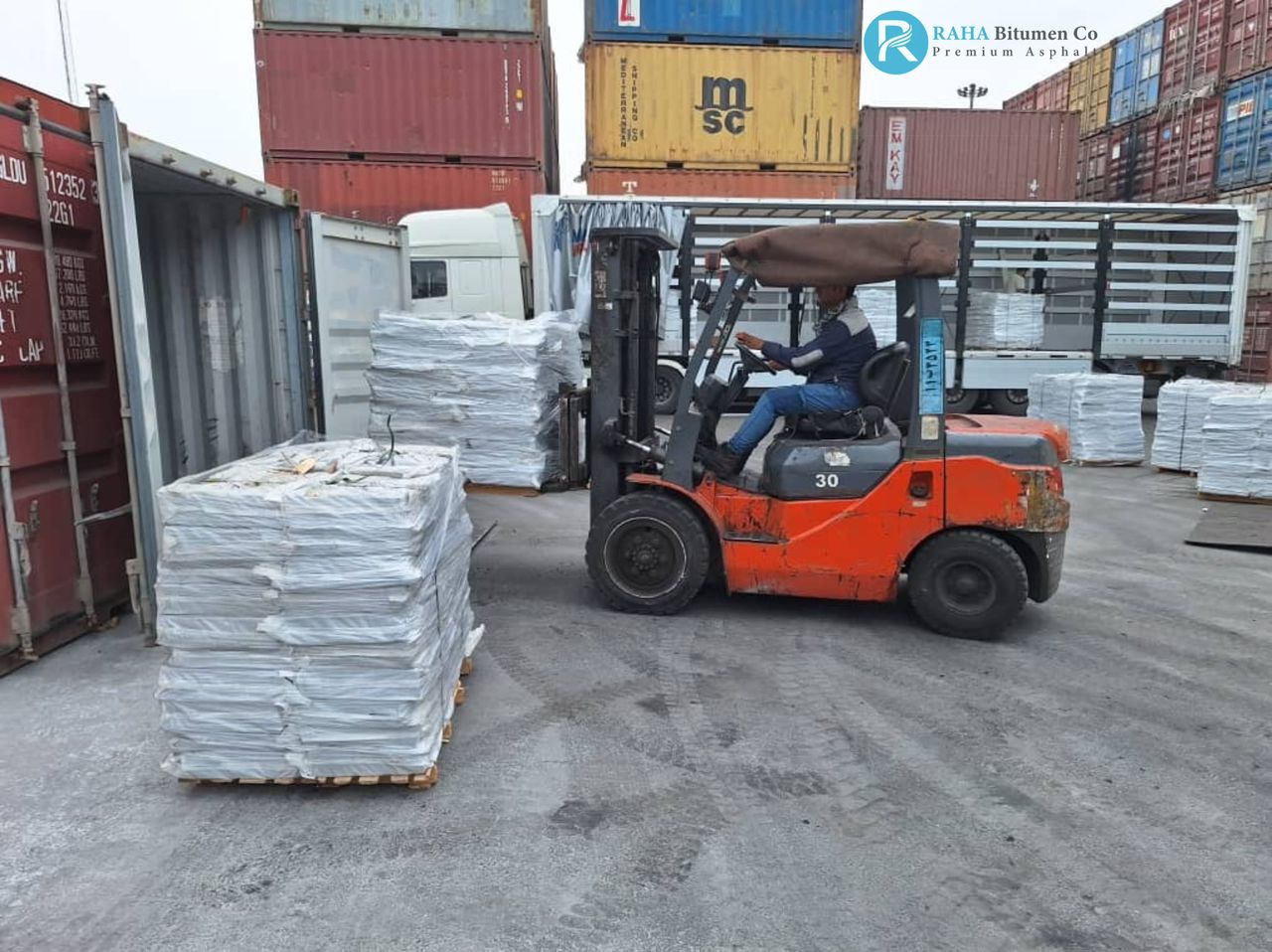
- Multiple packaging options: 25kg meltable polyamide bags, kraft bags, 200L drums, bulk tanker
- Available automotive grades: 85/25, 85/40, 90/40, 95/25, 115/15
- Fast global delivery from Isfahan, Iran via Dubai, UAE hub
📞 Contact our automotive specialist team:
Dubai Office: +971 56 281 7292 (WhatsApp)
Email: info@rahabitumen.com
Frequently Asked Questions
What grade of oxidized bitumen is used for undercarriage sealant?
Oxidized bitumen 85/25 is the most widely used grade for automotive undercarriage sealant formulation globally. It provides the optimal balance of softening point (~85°C for heat resistance near exhaust), penetration (flexibility at low temperatures), and workability for sealant compounding. For cold-climate vehicles, 90/40 offers improved flexibility at temperatures below -20°C.
What is the difference between bitumen undercarriage sealant and rubberized undercoating?
Bitumen undercarriage sealant uses oxidized bitumen as the primary binder — providing excellent corrosion protection at the lowest cost. Rubberized undercoating adds SBR or natural rubber to the oxidized bitumen base, enhancing flexibility, stone chip resistance, and sound damping. Rubberized bitumen systems are the most common OEM specification globally — they deliver the best performance-to-cost ratio. Pure bitumen systems are used where cost is the primary constraint.
How long does bitumen underbody coating last?
A factory-applied OEM bitumen underbody coating system typically protects a vehicle for its full service life — 10–15 years for passenger cars. Aftermarket bitumen underbody coating applied in workshops typically lasts 3–5 years before requiring inspection and potential re-application, depending on driving conditions, climate, and road salt exposure.
Can oxidized bitumen undercarriage sealant be used on electric vehicles?
Yes, with product-specific qualification. Standard bitumen undercarriage coatings are compatible with the e-coated steel floor pans of EVs. However, for areas adjacent to or covering battery packs, the specific formulation must be qualified for thermal resistance (typically up to 80–100°C) and compatibility with battery pack materials and adhesives. Contact RAHA Bitumen for automotive OEM qualification support.
What is the application temperature for bitumen undercarriage sealant?
Spray-applied bitumen undercarriage sealants are applied cold — at ambient temperature. They require no pre-heating of the material. The substrate (vehicle body) should be at room temperature (minimum 10°C) and completely dry. After spray application, the coating is cured in the paint oven at 130–160°C for 20–30 minutes in OEM production, or air-dried at ambient temperature in aftermarket applications.
How does bitumen underbody coating provide sound damping?
Oxidized bitumen’s high density (1,200–2,000 kg/m³) adds mass to the floor pan, which reduces sound transmission according to the mass law of acoustics. Its viscoelastic properties also provide constrained layer damping — converting mechanical vibration energy from the floor pan into heat, reducing panel resonance and road noise inside the cabin. The combined effect reduces road and road-tire noise by 3–8 dB in typical automotive applications.
Summary – Oxidized Bitumen Undercarriage Sealant at a Glance
| Primary Applications | OEM underbody coating, seam sealing, anti-drumming, aftermarket undercoating |
| Top Grades | 85/25 (standard), 90/40 (cold climate), 95/25 (hot climate) |
| Application Method | Spray (airless/conventional/aerosol), brush, cartridge gun |
| Dry Film Thickness | 1,000–2,000 microns (spray), 2–4mm (anti-drumming) |
| Cure Method | Air dry (aftermarket) or oven cure 130–160°C (OEM) |
| Service Life | 10–15 years (OEM), 3–5 years (aftermarket) |
| Market Size (2025) | USD 2.5 billion globally |
| Key Standards | ISO 9227 (salt spray), ASTM D312, SAE J400 (stone chip) |
| Available From | RAHA Bitumen – Global Supplier |
Related Products & Pages:
→ Oxidized Bitumen 85/25 — standard automotive grade
→ Oxidized Bitumen 90/40 — cold-climate grade
→ Oxidized Bitumen 95/25 — hot-climate grade
→ Oxidized Bitumen Sound Dampening Felt
→ Oxidized Bitumen for Roofing
→ Oxidized Bitumen for Waterproofing
→ Oxidized Bitumen for Pipe Coating
→ All Oxidized Bitumen Grades
Page last updated: May 2025 | Published by RAHA Bitumen Co. (RABIT) | Dubai, UAE & Isfahan, Iran
