
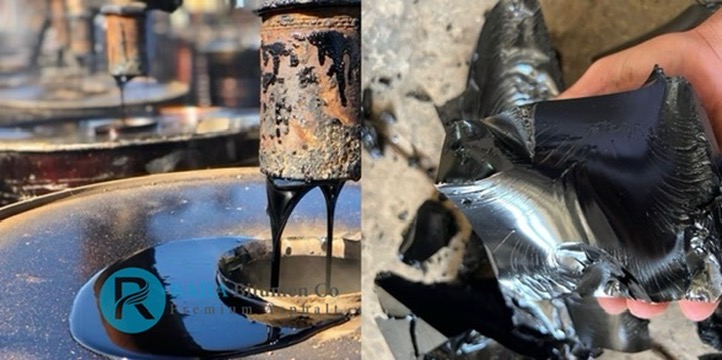
Oxidized Bitumen vs Penetration Bitumen: Key Differences, Properties & Applications
Oxidized bitumen vs penetration bitumen is one of the most frequently asked questions in the bitumen industry. Both are derived from crude oil, both are black and viscous at elevated temperatures, and both are used in construction and industrial applications — yet they are fundamentally different materials with very different properties, production methods, and uses.
Understanding the difference between these two types of bitumen is critical for engineers, contractors, material buyers, and project specifiers. Choosing the wrong type can result in premature failure, cost overruns, and safety issues. Choosing the right type delivers decades of reliable performance. This complete guide by RAHA Bitumen’s technical team explains everything you need to know — from production chemistry to performance properties, grades, applications, and a definitive selection guide.
The short answer: Penetration bitumen is flexible and used primarily for road construction. Oxidized bitumen is hard, heat-resistant, and used for roofing, waterproofing, pipe coating, and industrial applications. They start from the same raw material but the air-blowing process transforms penetration bitumen into a fundamentally different material.
What Is Penetration Bitumen?
Penetration bitumen — also called penetration grade bitumen, road bitumen, or paving bitumen — is the most commonly used type of bitumen worldwide. It is produced directly from the vacuum distillation of crude oil, without any further chemical treatment beyond distillation and blending.
How it’s made:
- Crude oil is processed in a refinery — the lighter fractions (gasoline, diesel, kerosene) are removed by atmospheric and vacuum distillation
- The heavy residue remaining after vacuum distillation is bitumen
- This residue may be air-rectified (lightly treated) to achieve target specifications, but is not subjected to the sustained air-blowing process that creates oxidized bitumen
- Different grades are produced by blending residues of different viscosities or by controlling the depth of distillation
How it’s graded:
Penetration bitumen is graded by its penetration value — how many tenths of a millimeter a standard 100g needle penetrates the bitumen in 5 seconds at 25°C (ASTM D5 / EN 1426). Higher penetration number = softer material.
Common grades: 40/50, 60/70, 80/100, 120/150
Key properties:
- Softening point: typically 42°C–60°C depending on grade
- Penetration Index (PI): typically -1 to +1 (temperature-susceptible)
- Flexible and ductile at ambient temperatures
- Viscoelastic behavior — acts like a viscous liquid at high temperatures, elastic solid at low temperatures
- Excellent adhesion to road aggregates
- Relatively temperature-susceptible — softens significantly in heat, stiffens in cold
What Is Oxidized Bitumen?
Oxidized bitumen — also known as blown bitumen, blown asphalt, or hard bitumen — is produced by taking penetration grade bitumen as a starting material and subjecting it to a controlled air-blowing process at high temperature. This fundamentally transforms its chemical structure and physical properties.
How it’s made:
- Penetration grade bitumen is heated to 240°C–300°C in a blowing still
- Hot air is continuously injected through the molten bitumen under controlled conditions
- Oxygen from the air reacts with the bitumen molecules — an exothermic oxidation reaction occurs
- This reaction increases molecular weight, cross-links polymer chains, and creates a gel-like microstructure
- The result is a material that is harder, more viscous, less volatile, and far less temperature-susceptible than the starting penetration bitumen
- The degree of transformation is controlled by blowing time, temperature, and air flow rate — producing different grades
How it’s graded:
Oxidized bitumen is graded by two numbers: softening point (°C) / penetration (dmm). For example, 85/25 means softening point ~85°C and penetration ~25 dmm.
Common grades: 85/25, 90/40, 95/25, 105/35, 115/15, 150/5
Key properties:
- Softening point: 85°C–155°C depending on grade
- Penetration Index (PI): +2 to +8 (low temperature susceptibility)
- Hard, stiff, and rigid at ambient temperatures
- Gel-like microstructure — excellent shape retention under load
- Near-zero water permeability
- Low temperature susceptibility — maintains performance across wide temperature range
Oxidized Bitumen vs Penetration Bitumen – Complete Comparison Table
| Property | Penetration Bitumen | Oxidized Bitumen |
|---|---|---|
| Production Method | Vacuum distillation of crude oil | Air blowing of penetration bitumen at 240–300°C |
| Softening Point | 42°C – 60°C (typical) | 85°C – 155°C (depending on grade) |
| Penetration @ 25°C | 40 – 300 dmm (soft to medium) | 5 – 40 dmm (hard to very hard) |
| Penetration Index (PI) | -1 to +1 | +2 to +8 |
| Temperature Susceptibility | High — softens significantly in heat | Low — stable across wide temperature range |
| Flexibility | High — elastic and ductile | Lower — stiffer and more rigid |
| Heat Resistance | Low — not suitable for high-temp applications | Excellent — maintains structure up to 115–155°C |
| Water Permeability | Low | Near-zero — superior waterproofing |
| Adhesion to Aggregates | Excellent — ideal for road binders | Good — suitable for industrial substrates |
| Viscosity at Application Temp | Lower — easier to mix with aggregates | Higher — requires higher application temperatures |
| Application Temperature | 140°C – 170°C (mixing with aggregates) | 200°C – 230°C (hot application) |
| Color | Black | Black (slightly darker) |
| Grading System | Single number: penetration value (60/70, 80/100) | Two numbers: softening point/penetration (85/25, 115/15) |
| Primary Application | Road construction, asphalt paving | Roofing, waterproofing, pipe coating, industrial |
| Standard | ASTM D946, EN 12591 | ASTM D312, BS 3690 |
The Chemistry Behind the Difference
The fundamental difference between oxidized bitumen and penetration bitumen is chemical — not just physical. Understanding the chemistry helps explain why their properties are so different.
Penetration Bitumen Chemistry
Penetration bitumen consists of two main molecular fractions:
- Maltenes (~80–85%): Lower molecular weight, oil-like components that provide fluidity and flexibility. Include aromatics, saturates, and resins.
- Asphaltenes (~15–20%): High molecular weight, polar molecules that form the structural “skeleton” of the bitumen. Dispersed in the maltene phase as colloidal particles.
In penetration bitumen, the asphaltenes are relatively mobile — they can rearrange under stress, giving the material its elastic, flexible behavior. The material is a “sol” type — asphaltenes dispersed in a continuous maltene matrix.
What Air Blowing Does to the Chemistry
When hot air is blown through penetration bitumen at 240–300°C, several chemical reactions occur simultaneously:
- Oxidation of aromatics: Oxygen reacts with aromatic compounds, converting them to higher molecular weight ketones and sulfoxides
- Dehydrogenation: Hydrogen is removed from the bitumen molecules, increasing unsaturation and molecular weight
- Condensation polymerization: Smaller molecules combine to form larger ones — increasing average molecular weight
- Asphaltene enrichment: The asphaltene content increases significantly as maltene molecules are converted to higher molecular weight species
The result is a “gel” type structure — a continuous three-dimensional network of asphaltene molecules, rather than discrete asphaltene particles dispersed in maltenes. This gel structure is what gives oxidized bitumen its characteristic high softening point, low temperature susceptibility, and rigid behavior.
Production Process Comparison
Penetration Bitumen Production
- Crude oil → atmospheric distillation → removes gasoline, naphtha, kerosene
- Atmospheric residue → vacuum distillation → removes gas oils, lube oil fractions
- Vacuum residue = bitumen feedstock
- Light air rectification (optional) to achieve target penetration and softening point
- Quality testing and packaging
Oxidized Bitumen Production
- Penetration grade bitumen is selected as feedstock (typically 60/70 or 80/100)
- Bitumen is heated to 240°C–300°C in a blowing still
- Hot air (or sometimes oxygen-enriched air) is injected continuously through the molten bitumen
- Exothermic reaction occurs — temperature must be carefully controlled to prevent runaway
- Blowing continues until target softening point and penetration are achieved
- Quality testing: softening point, penetration, flash point, ductility, loss on heating
- Packaging in meltable polyamide bags, drums, or bulk
Grade Comparison – Side by Side
Penetration Bitumen Grades
| Grade | Penetration (dmm) | Softening Point (°C) | Primary Use |
|---|---|---|---|
| 40/50 | 40–50 | ~51–58 | Heavy traffic roads, hot climates |
| 60/70 | 60–70 | ~48–56 | Standard road construction — most widely used globally |
| 80/100 | 80–100 | ~42–51 | Cold climate roads, modified bitumen feedstock |
| 120/150 | 120–150 | ~38–46 | Very cold climates, crack sealing, flux bitumen |
Oxidized Bitumen Grades
| Grade | Softening Point (°C) | Penetration (dmm) | Primary Use |
|---|---|---|---|
| 85/25 | ~85 | ~25 | Roofing, waterproofing, sound dampening felt |
| 90/40 | ~90 | ~40 | Canal lining, flexible waterproofing, BUR roofing |
| 95/25 | ~95 | ~25 | Pipe coating, bridge decks, hot climate waterproofing |
| 105/35 | ~105 | ~35 | Industrial applications, heavy-duty pipe coating |
| 115/15 | ~115 | ~15 | Carpet tile backing, APP membranes, hot-climate roofing |
| 150/5 | ~150 | ~5 | Extreme heat applications, specialty industrial |
Applications – Where Each Type Is Used
Where Penetration Bitumen Is Used
Penetration bitumen dominates road construction applications globally — its flexibility, adhesion to aggregates, and ability to accommodate repeated traffic loading make it the ideal binder for asphalt concrete.
- Asphalt pavement construction: The primary binder in hot mix asphalt (HMA) and warm mix asphalt (WMA) for roads, highways, airports, and parking lots
- Surface dressing / chip sealing: Sprayed onto existing road surfaces as a rejuvenating and aggregate-binding treatment
- Slurry sealing: Mixed with fine aggregates and water for road surface maintenance
- Base for modified bitumen: Starting material for SBS and APP polymer-modified bitumen production
- Base for oxidized bitumen: The raw material that is air-blown to produce oxidized bitumen
- Base for emulsified bitumen: The bitumen phase in bitumen emulsions for road maintenance
- Base for cutback bitumen: Diluted with solvents to produce liquid cutback products for cold application
Where Oxidized Bitumen Is Used
Oxidized bitumen dominates industrial and building applications — its high softening point, waterproofing performance, and stability make it ideal for non-road applications.
- Roofing systems: BUR systems, roofing felt, APP and SBS membrane production
- Waterproofing: Foundation waterproofing, basement protection, tunnel linings, bridge decks
- Pipe coating: Anti-corrosion coating for steel water, gas, and oil pipelines
- Carpet tile backing: Dimensional stability and moisture barrier in modular carpet tiles
- Sound dampening felt: Automotive floor pans, building floor underlays
- Dam & canal lining: Seepage prevention in irrigation and hydraulic structures
- Automotive undercarriage sealant: Corrosion protection and NVH reduction
- Paints & varnishes: Anti-corrosion paint base for metals and steel structures
- Electrical cable insulation: Moisture protection for underground cables
- Battery industry: EV battery pack protection; emerging carbon anode precursor
Can You Use Penetration Bitumen Instead of Oxidized Bitumen?
This is a common question — and the answer is generally no for most applications where oxidized bitumen is specified. Here’s why:
| Application | Can Penetration Bitumen Replace Oxidized? | Why Not |
|---|---|---|
| Flat roof waterproofing | ❌ No | Too low softening point — will sag and flow in summer heat |
| Hot-applied waterproofing membrane | ❌ No | Will soften and flow at service temperatures, losing waterproofing integrity |
| Pipe coating (bitumen enamel) | ❌ No | Insufficient hardness and heat resistance for pipeline service conditions |
| Carpet tile backing | ❌ No | Too soft — tiles would curl, deform, and lose dimensional stability |
| Canal lining | ❌ No | Would soften in hot weather and be displaced by water pressure |
| Cold climate road construction | ✅ Yes (penetration is correct) | Oxidized bitumen would be too stiff and prone to cracking in cold |
Key rule: Use penetration bitumen where flexibility and adhesion are primary requirements (roads, pavements). Use oxidized bitumen where heat resistance, waterproofing, and dimensional stability are primary requirements (buildings, industrial, pipe coating).
Can You Use Oxidized Bitumen Instead of Penetration Bitumen for Roads?
For standard road construction: no. Oxidized bitumen is too stiff and has insufficient ductility for use as a road binder in hot mix asphalt. In cold climates, it would be prone to brittle cracking under traffic loading.
However, there are specific road applications where oxidized bitumen IS used:
- Crack sealing and joint sealing in pavements — where high stiffness and heat resistance are needed to resist traffic flow
- Slurry seal and microsurfacing binders (specific grades)
- Cold climate road surface treatments where high stiffness is acceptable
How to Choose: Oxidized Bitumen vs Penetration Bitumen
Use this decision guide to select the right type for your project:
Choose Penetration Bitumen when:
- ✅ Your application is road paving, asphalt concrete, or surface dressing
- ✅ You need flexibility and resistance to fatigue cracking under traffic
- ✅ The material will be mixed with aggregates at 140–170°C
- ✅ You are in a cold or moderate climate where low-temperature flexibility is critical
- ✅ You need feedstock for producing modified bitumen (SBS/APP) or emulsions
Choose Oxidized Bitumen when:
- ✅ Your application involves roofing, waterproofing, or below-grade protection
- ✅ The material will be exposed to high temperatures (direct sun, hot climates)
- ✅ You need a continuous, impermeable waterproofing barrier
- ✅ Your application involves pipe coating, industrial coatings, or cable insulation
- ✅ You are manufacturing carpet tiles, sound dampening felt, or undercarriage sealants
- ✅ Dimensional stability under load is required
Penetration Index (PI) – The Key Differentiator
The Penetration Index (PI) is the single most important parameter that distinguishes oxidized bitumen from penetration bitumen — and explains why they behave so differently across temperatures.
PI is calculated from the softening point and penetration values and measures how much the bitumen’s stiffness changes with temperature:
- PI = -1 to +1: Penetration grade bitumen — moderately temperature-susceptible, standard road behavior
- PI = +2 to +8: Oxidized bitumen — low temperature susceptibility, maintains stiffness over wide temperature range
- Higher PI = less temperature-susceptible = more stable across temperatures
This is why oxidized bitumen with PI +2 to +8 maintains its structural integrity on a hot roof at 70°C while penetration bitumen (PI -1 to +1) would soften and flow under the same conditions.
Why Source Both Types from RAHA Bitumen?
RAHA Bitumen (RABIT) is a global supplier of both penetration bitumen and oxidized bitumen, supplying to road contractors, waterproofing manufacturers, pipe coating plants, and industrial users in over 100 countries.
- Full product range: All penetration grades (40/50 to 200/300) and all oxidized grades (75/25 to 150/5)
- Consistent quality: SGS and Bureau Veritas third-party testing for every shipment
- Complete documentation: TDS, MSDS, COA for all grades
- Multiple packaging: Bulk tanker, 200L drums, 25kg meltable bags, new steel drums
- Fast global delivery from Isfahan, Iran via Dubai, UAE hub
- Technical support: Grade selection guidance for your specific application
📞 Contact our technical team:
Dubai Office: +971 56 281 7292 (WhatsApp)
Email: info@rahabitumen.com
Frequently Asked Questions
What is the main difference between oxidized bitumen and penetration bitumen?
The main difference is production method and resulting properties. Penetration bitumen comes directly from crude oil distillation and is characterized by flexibility, moderate softening point (42–60°C), and high temperature susceptibility — making it ideal for road construction. Oxidized bitumen is produced by air-blowing penetration bitumen at 240–300°C, which dramatically increases its softening point (85–155°C), reduces penetration, and creates a hard, heat-resistant, low-temperature-susceptible material ideal for roofing, waterproofing, and industrial applications.
Can oxidized bitumen be used for road construction?
Generally no. Oxidized bitumen is too stiff and has insufficient ductility for standard hot mix asphalt road binder applications. It would be prone to brittle cracking under traffic loading in most climates. Specific oxidized grades are used for road crack sealing and joint sealing, but standard road paving requires penetration grade bitumen. For enhanced road performance in extreme temperatures, polymer-modified bitumen (PMB) — not oxidized bitumen — is the standard solution.
Why does oxidized bitumen have a higher softening point than penetration bitumen?
The air-blowing process chemically transforms the bitumen’s molecular structure. Oxygen reacts with the aromatic compounds, causing dehydrogenation and condensation polymerization reactions that increase average molecular weight and create a three-dimensional gel-like network of asphaltene molecules. This gel structure resists flow at higher temperatures, raising the softening point from the typical 42–60°C of penetration bitumen to 85–155°C for oxidized bitumen grades.
What does the Penetration Index (PI) tell you about bitumen?
The Penetration Index measures how much a bitumen’s stiffness changes with temperature. Penetration bitumen has a PI of -1 to +1, meaning its stiffness changes significantly with temperature — it softens in heat and stiffens in cold. Oxidized bitumen has a PI of +2 to +8, meaning its stiffness is much more stable across temperatures. A higher PI is better for applications requiring consistent performance across a wide temperature range, such as roofing, waterproofing, and industrial coatings.
Is oxidized bitumen more expensive than penetration bitumen?
Yes, typically. Oxidized bitumen requires additional processing (the air-blowing step) beyond penetration bitumen production, adding manufacturing cost. The price premium for oxidized bitumen over the equivalent penetration grade feedstock is typically USD 30–80/ton depending on grade and market conditions. However, for the applications where oxidized bitumen is specified, there is no lower-cost alternative that provides equivalent performance — making the premium well justified by longer service life and reduced maintenance costs.
How do you identify oxidized bitumen vs penetration bitumen?
The most reliable identification is through testing: check the softening point (Ring & Ball, ASTM D36) — above 80°C indicates oxidized bitumen, below 65°C indicates penetration bitumen. The penetration value (ASTM D5) also distinguishes them: below 40 dmm typically indicates oxidized, above 40 dmm typically indicates penetration grade. The grade labeling also differs: penetration bitumen uses a single penetration range (60/70), while oxidized bitumen uses two numbers showing softening point and penetration (85/25).
Summary – Oxidized Bitumen vs Penetration Bitumen at a Glance
| Parameter | Penetration Bitumen | Oxidized Bitumen |
| Production | Vacuum distillation | Air blowing of penetration bitumen |
| Softening Point | 42–60°C | 85–155°C |
| Penetration | 40–300 dmm | 5–40 dmm |
| Penetration Index | -1 to +1 | +2 to +8 |
| Key Strength | Flexibility, adhesion | Heat resistance, waterproofing |
| Primary Use | Road paving | Roofing, waterproofing, industrial |
| Standard | ASTM D946, EN 12591 | ASTM D312, BS 3690 |
Related Products & Pages:
→ All Oxidized Bitumen Grades
→ All Penetration Grade Bitumen
→ Oxidized Bitumen 85/25
→ Oxidized Bitumen 115/15
→ Penetration Bitumen 60/70
→ Oxidized Bitumen for Roofing
→ Oxidized Bitumen for Waterproofing
→ Oxidized Bitumen vs Modified Bitumen
→ Oxidized Bitumen for Pipe Coating
Page last updated: May 2025 | Published by RAHA Bitumen Co. (RABIT) | Dubai, UAE & Isfahan, Iran
