
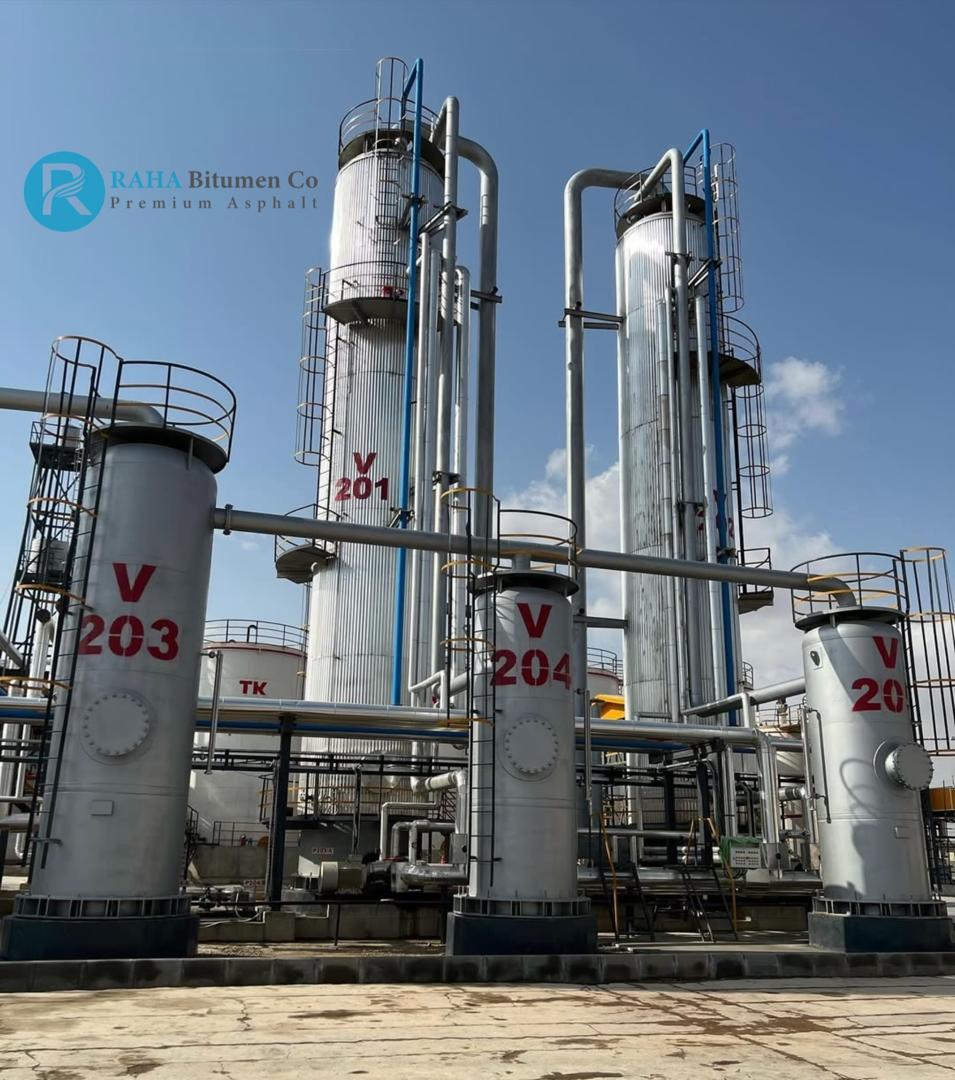
Blown Asphalt Production Process: Air Blowing Methods, Reactor Types, Chemistry & International Standards
The blown asphalt production process — also known as oxidized bitumen production, and scientifically defined as controlled thermal oxidation of petroleum bitumen — is an industrial process in which penetration grade bitumen is subjected to a sustained reaction with hot compressed air at elevated temperatures. This process, first developed commercially in the early 20th century and now standardized under international frameworks including ASTM D312, BS 3690, and EN 13304, transforms the colloidal structure and rheological properties of bitumen through a series of irreversible chemical reactions.
The result — oxidized bitumen, also known as blown bitumen or blown asphalt — is a fundamentally different material from its penetration grade feedstock: harder, more viscous, more heat-resistant, and far less temperature-susceptible. Understanding the blown asphalt production process in detail is essential for quality specification, supplier evaluation, grade selection, and troubleshooting performance issues in downstream applications.
This technical guide by RAHA Bitumen covers the complete blown asphalt production process: the chemistry at the molecular level, all major production methods and reactor types, process parameters, international standards, quality control, and environmental management — supported by peer-reviewed scientific literature and international standard bodies.
The Molecular Chemistry of Blown Asphalt Production
Before examining the industrial process, understanding the underlying chemistry is essential. The blown asphalt production process is not simply “heating bitumen” — it is a controlled irreversible chemical transformation at the molecular level.
Bitumen Molecular Composition: The SARA Framework
Bitumen is a complex mixture of thousands of hydrocarbon compounds. Research published in Road Materials and Pavement Design (Taylor & Francis, 2024) and Construction and Building Materials (Elsevier, 2024) describes bitumen molecular composition using the widely accepted SARA fractionation system:
- Saturates (S): Straight-chain and branched alkanes — low molecular weight, non-polar, contribute to fluidity
- Aromatics (A): Polycyclic aromatic hydrocarbons with naphthenic rings — form the dominant fraction (~40–65% by mass), provide viscoelasticity
- Resins (R): Polar aromatic molecules with heteroatoms (nitrogen, oxygen, sulfur) — act as peptizing agents that stabilize asphaltenes in the colloidal system
- Asphaltenes (A): High molecular weight, highly polar, polycyclic aromatic structures — form colloidal particles dispersed in the maltene (S+A+R) phase. Asphaltene content typically 5–25% in penetration bitumen.
Research from the ACS Energy & Fuels journal (2023) confirms that asphaltene content increases significantly with oxidation — by more than 75% after extended oxidative treatment, as maltene-fraction molecules are converted to asphaltenic structures through condensation and polymerization reactions.
The Four Key Chemical Reactions During Air Blowing
When hot air contacts bitumen at 240–300°C, four primary reaction pathways occur simultaneously, as characterized by decades of academic research including Petersen & Harnsberger (1998) and confirmed by more recent spectroscopic studies in Construction and Building Materials (2024):
Reaction 1: Oxidation of Aromatic and Naphthenic Compounds
Oxygen reacts with the aromatic fraction, particularly at benzylic positions, forming carbonyl-containing functional groups — ketones (C=O), sulfoxides (S=O), and carboxylic acids (COOH). Research using Fourier Transform Infrared Spectroscopy (FTIR) confirms the formation of these polar functional groups as primary oxidation markers. These reactions are exothermic — they release heat that must be actively managed in the reactor.
Reaction 2: Dehydrogenation
Hydrogen atoms are abstracted from bitumen molecules by oxygen radicals, producing water vapor (H₂O) that exits the reactor as steam, and increasing the degree of unsaturation of the residual molecules. This reaction increases average molecular weight and contributes to the formation of polycyclic aromatic structures, which in turn associate with the asphaltene fraction via π-bonding and increase viscosity.
Reaction 3: Condensation Polymerization
Reactive intermediate molecules combine (condense) to form larger, higher molecular weight species. Molecules shift progressively from the aromatics fraction → resins fraction → asphaltenes fraction as oxidation proceeds. SAXS (Small Angle X-ray Scattering) studies published in ACS Energy & Fuels (2023) show a measurable increase in asphaltene nanoaggregate size from ~1.8nm to ~2.3nm and primary cluster size from ~4.7nm to ~5.4nm after extended oxidative treatment.
Reaction 4: Cross-linking and Gel Network Formation
The growing asphaltene molecules cross-link through non-covalent interactions (π-π stacking of aromatic rings, hydrogen bonding of polar functional groups), forming a continuous three-dimensional gel-like network. This transition from a “sol” structure (asphaltenes dispersed in maltene) to a “gel” structure (interconnected asphaltene network) is the fundamental cause of the high softening point, low penetration, and dramatically reduced temperature susceptibility of oxidized bitumen.
Scientific confirmation: Research published in Scientific Reports (Nature Publishing Group, 2021) using Atomic Force Microscopy (AFM) and Scanning Tunnelling Microscopy (STM) confirmed that highly oxidized compounds are preferentially situated in the asphaltene-rich phase of bitumen, emphasizing the progressive enrichment of the asphaltene fraction during the oxidation process.
Net Effect on Measurable Properties
| Property | Penetration Bitumen (60/70) | After Oxidation (85/25) | After Oxidation (115/15) |
|---|---|---|---|
| Softening Point (°C) | ~49–56 | ~83–87 | ~112–118 |
| Penetration (dmm) | 60–70 | 22–28 | 12–18 |
| Penetration Index (PI) | -1 to +1 | +2 to +4 | +5 to +8 |
| Asphaltene Content | ~15–20% | ~25–35% | ~35–50% |
| Colloidal Structure | Sol (dispersed asphaltenes) | Sol-Gel transition | Gel (network structure) |
| Temperature Susceptibility | High | Low | Very Low |
Blown Asphalt Production Methods – Overview
Industrially, oxidized bitumen is produced in facilities called bitumen blowing units, air blowing units, or oxidation plants. All production methods share the same fundamental principle — hot air contact with hot bitumen — but differ significantly in reactor design, process continuity, and operational characteristics.
The principal production methods are:
- Batch (Discontinuous) Blowing Process — most widely used globally
- Continuous Blowing Process — high-throughput single-grade production
- Semi-Continuous (Staggered) Blowing Process — intermediate approach
- Bubble Column Reactor Process — large-volume industrial variant
- Catalytic Air Blowing Process — accelerated oxidation using chemical catalysts
Blown Asphalt Production Method 1: Batch (Discontinuous) Blowing Process
The batch process is the most widely used method for oxidized bitumen production worldwide, and the method used at RAHA Bitumen’s Isfahan production facility. It is preferred for its operational flexibility, ability to produce multiple grades from a single unit, and lower capital investment compared to continuous systems.
Process Description
A fixed volume of pre-heated bitumen feedstock is loaded into the blowing reactor. Air is blown continuously through the bitumen until the target grade specifications (softening point and penetration) are achieved. The reactor is then emptied, and the next batch begins.
Process Flow
- Feedstock loading: Pre-heated bitumen transferred to blowing reactor — filled to maximum 70% of reactor volume (30% headspace for foam expansion)
- Heating to reaction temperature: Bitumen brought to 240–270°C
- Air injection begins: Compressed air injected through spargers at base of reactor at 85–140 m³/min
- Reaction monitoring: Periodic sampling every 30–60 minutes — softening point (ASTM D36) and penetration (ASTM D5) tested in on-site laboratory
- Reaction termination: Air injection stopped when target grade is confirmed by laboratory testing
- Product discharge: Finished oxidized bitumen discharged to cooling/storage tanks
- Packaging: Cooled product packaged per order specifications
Key Operational Parameters
| Parameter | Typical Range |
|---|---|
| Reaction temperature | 215°C – 260°C |
| Air flow rate | 85 – 140 m³/min per reactor |
| Reactor fill level | Maximum 70% |
| Blowing duration | 4 – 24+ hours (depends on target grade) |
| Sampling frequency | Every 30–60 minutes |
Advantages of Batch Process
- ✅ Maximum flexibility — multiple grades produced from one unit by varying blowing time
- ✅ Precise grade targeting — reaction stopped at exact specification
- ✅ Simpler process control — easier to operate and troubleshoot
- ✅ Lower capital investment than continuous systems
- ✅ Suitable for custom or specialty grades
Disadvantages
- ❌ Lower throughput per unit of time vs. continuous process
- ❌ Downtime between batches for loading/unloading
- ❌ More variability between batches if process control is not rigorous
Blown Asphalt Production Method 2: Continuous Blowing Process
In the continuous process, bitumen feedstock enters the blowing reactor at a constant, controlled flow rate while finished oxidized bitumen exits from the other end of the system simultaneously. The reactor operates under steady-state conditions — reaction temperature, air flow, and residence time are maintained constant to produce a consistent single grade.
Process Description
As described in civil engineering process literature, the vacuum bottom (feedstock bitumen) enters the reactor with a constant and controllable flow rate. After air blowing under stable operating conditions, it is continuously discharged from the air blowing tower.
Reactor Design for Continuous Process
- Typically a tall vertical column (bubble column reactor) — bitumen flows downward while air rises upward
- Multiple air injection points along the reactor height
- Residence time controlled by feed rate and reactor volume
- Temperature profile maintained by external heating/cooling
- Continuous product quality monitoring via inline sensors
Advantages of Continuous Process
- ✅ Higher throughput — more product per unit of time
- ✅ More consistent product quality (steady-state operation)
- ✅ Lower labor cost per tonne of product
- ✅ Better suited for large-scale single-grade production
Disadvantages
- ❌ Less flexible — difficult to change grades without shutdown and reconfiguration
- ❌ Higher capital investment
- ❌ More complex process control and startup/shutdown procedures
- ❌ Not economical for small production runs or specialty grades
Blown Asphalt Production Method 3: Semi-Continuous (Staggered) Blowing Process
The semi-continuous or staggered process combines elements of both batch and continuous methods. Multiple reactors operate in parallel at different stages of the blowing cycle — while one reactor is being loaded, another is blowing, and a third is discharging. This approach increases overall plant throughput while maintaining some of the grade flexibility of the batch process.
Key Characteristics
- Multiple reactors (typically 3–6) operating in staggered sequence
- Each reactor operates as a batch unit, but plant output is quasi-continuous
- Allows multiple grades to be produced simultaneously in different reactors
- Higher overall throughput than single-reactor batch operation
- Used in large-scale oxidized bitumen export facilities
Blown Asphalt Production Method 4: Bubble Column Reactor Process
The bubble column technique is the classical large-volume industrial reactor design for oxidized bitumen production. As documented in US Patent literature (US Patent 4,975,176 and related prior art), air is injected through spargers at the base of a large vertical cylindrical vessel, rising through the bitumen as fine bubbles to maximize air-bitumen contact area.
Bubble Column Design Features
- Large volume reactor — high bitumen inventory per reactor
- Air injection from bottom through multi-point sparger system
- Baffles or mechanical agitation to improve bubble distribution and mixing
- Off-gas collection at reactor top — critical for safety and environmental compliance
- Water jacket or spray cooling to manage exothermic reaction heat
Limitations of Conventional Bubble Columns
Academic and patent literature identifies several limitations of the conventional bubble column design:
- Large oil and gas inventory creates significant fire and explosion risk in leak scenarios
- High oxygen content of off-gas requires careful management
- Long residence time can lead to over-oxidation in some zones
- Incomplete air-bitumen contact in large-diameter reactors without adequate agitation
Modern Improvements: Turbine Mixer Reactors
US Patent literature documents the development of turbine mixer reactors that use impeller-based mixing to improve air-bitumen contact efficiency. These designs offer:
- Smaller reactor volume (lower risk in leak scenarios)
- Better air distribution and more uniform oxidation
- Faster reaction times per grade
- More consistent product quality
Blown Asphalt Production Method 5: Catalytic Air Blowing Process
In the catalytic process, chemical catalysts are added to the bitumen before or during air blowing to accelerate the oxidation reactions, reduce blowing time, and/or modify the final product’s properties.
Common Catalysts Used
| Catalyst Type | Effect | Applications |
|---|---|---|
| Ferric Chloride (FeCl₃) | Accelerates oxidation — reduces blowing time by 20–40% | General accelerated production |
| Phosphorus Pentoxide (P₂O₅) | Modifies rheological properties — improves adhesion | Specialty roofing grades |
| Sulfuric Acid (H₂SO₄) | Accelerates reaction at lower temperatures | Industrial applications |
| Metal Salts (Fe, Mn compounds) | Promote radical chain oxidation mechanisms | Research / specialty grades |
Advantages and Considerations of Catalytic Process
- ✅ Reduced blowing time → higher throughput, lower energy cost
- ✅ Can achieve target grades from softer feedstocks more efficiently
- ✅ May improve specific product properties (adhesion, cohesion)
- ⚠️ Catalyst must be compatible with downstream application
- ⚠️ Some catalysts may affect product toxicology — important for potable water contact applications
- ⚠️ Higher raw material complexity and cost
Air Rectification in Blown Asphalt Production
Air rectification — also called partial air blowing or light blowing — is a related but distinct process in which a smaller amount of air is blown through bitumen for a shorter time than full oxidation. This produces material with intermediate properties between penetration bitumen and fully oxidized bitumen.
Characteristics of Air-Rectified Bitumen
- Softening point slightly higher than penetration bitumen (typically 55–70°C)
- Penetration reduced but not as low as oxidized grades
- Penetration Index between penetration bitumen and oxidized bitumen
- Used to fine-tune penetration grade bitumen properties for specific road applications
- Not classified as oxidized bitumen — it is a refined penetration grade product
Air Rectification vs. Full Oxidation
| Parameter | Air Rectification | Full Oxidation |
|---|---|---|
| Air volume used | Small (partial) | Large (sustained) |
| Softening point achieved | 55–70°C | 85–155°C |
| Penetration Index (PI) | ~0 to +2 | +2 to +8 |
| Primary use | Fine-tuning road bitumen grades | Industrial applications (roofing, waterproofing) |
| Product classification | Penetration grade (refined) | Oxidized / blown bitumen |
International Standards for Blown Asphalt Production
Oxidized bitumen production and product specification is governed by a robust framework of international standards. Quality buyers should always specify the applicable standard in their purchase orders.
ASTM D312 – Standard Specification for Asphalt Used in Roofing
The primary US standard for oxidized (blown) bitumen used in roofing applications. ASTM D312 classifies roofing asphalts into four types based on softening point and penetration, as referenced in the 2012 International Building Code and endorsed by the Asphalt Roofing Manufacturers Association (ARMA):
| Type | Softening Point (°C) | Penetration (dmm) | Slope Application |
|---|---|---|---|
| Type I | 57–66°C | 18–60 | Dead level (0–½ inch/foot) |
| Type II | 70–82°C | 18–40 | Low slope (½–1½ inch/foot) |
| Type III | 85–96°C | 15–35 | Steep slope (1½–3 inch/foot) |
| Type IV | 99–107°C | 10–25 | Special steep (above 3 inch/foot) |
All four ASTM D312 types are prepared from crude petroleum via the air blowing process. ASTM D312 Type III corresponds approximately to oxidized bitumen grade 90/40–95/25, and Type IV corresponds approximately to grade 105/35.
BS 3690 – British Standard for Bitumen for Building and Civil Engineering
The UK standard governing oxidized bitumen grades for construction applications. BS 3690 Part 1 specifies penetration grade bitumens; Part 2 covers oxidized bitumens with specified softening point and penetration ranges for industrial use.
EN 13304 / EN 13305 – European Standards for Oxidized Bitumen
European Committee for Standardization (CEN) standards governing oxidized bitumen for waterproofing membranes (EN 13304) and industrial applications (EN 13305). These standards are increasingly referenced in international project specifications alongside ASTM D312.
EN 10300 – Steel Tubes Bituminous Coating Standard
European standard governing bitumen enamel pipe coating systems — specifying oxidized bitumen grades required for external pipeline corrosion protection. Grades are classified as Category 1 Grade b/c.
ASTM D5 and ASTM D36 – Primary Test Methods
The two most critical test methods for characterizing oxidized bitumen:
- ASTM D5: Standard Test Method for Penetration of Bituminous Materials — measures depth of needle penetration in 1/10mm (dmm)
- ASTM D36: Standard Test Method for Softening Point of Bitumen (Ring-and-Ball apparatus) — measures temperature at which bitumen reaches a defined viscosity
Feedstock Selection and Its Effect on Final Grade
The quality, origin, and grade of the penetration bitumen feedstock directly affects the properties of the final oxidized product. This relationship is frequently underestimated by buyers who focus only on the finished product specification.
Effect of Feedstock on Oxidation Behavior
| Feedstock Characteristic | Effect on Oxidation Process | Effect on Final Product |
|---|---|---|
| Higher starting penetration (softer feedstock, e.g., 80/100) | Requires longer blowing time and more air | May produce higher volatile content; wider property distribution |
| Lower starting penetration (harder feedstock, e.g., 60/70) | Shorter blowing time required | More consistent product with tighter grade tolerance |
| High asphaltene content in feedstock | Faster softening point increase per unit of air | More efficient production of hard grades (115/15, 150/5) |
| High wax content in feedstock | Wax interferes with oxidation chemistry | Inferior low-temperature performance — brittle in cold conditions |
| High sulfur content in feedstock | Sulfur participates in oxidation — accelerates some reactions | Higher H₂S and SO₂ in off-gas — requires more robust scrubbing |
| Iranian crude-derived bitumen (RAHA Bitumen feedstock) | High asphaltene, low wax — ideal for oxidation | Consistent high-quality oxidized grades with excellent performance |
Quality Control Throughout the Production Process
In-Process Quality Control
- Sampling frequency: Every 30–60 minutes during blowing; every 15 minutes as target grade is approached
- Softening Point (ASTM D36): Primary grade control parameter — tracked continuously
- Penetration (ASTM D5): Confirms hardness development alongside softening point
- Flash Point (ASTM D92): Monitored for safety — minimum 250°C required at all times
- Viscosity: Inline measurement where available to track reaction progress and ensure pumpability
Final Product Testing (Certificate of Analysis — COA)
Every production batch at RAHA Bitumen is tested against the following parameters before release and packaging:
| Test | Standard | Significance |
|---|---|---|
| Softening Point (R&B) | ASTM D36 | Primary grade identifier — defines heat resistance |
| Penetration @ 25°C | ASTM D5 | Primary grade identifier — defines hardness |
| Flash Point (COC) | ASTM D92 | Safety — minimum 250°C for all grades |
| Ductility @ 25°C | ASTM D113 | Flexibility and cohesion indicator |
| Loss on Heating | ASTM D6 | Volatile content — maximum 0.5% |
| Solubility in CS₂ | ASTM D4 | Purity — minimum 99.0% |
| Specific Gravity @ 25°C | ASTM D70 | Density verification |
Off-Gas Management and Environmental Compliance
The air blowing process generates a stream of off-gases from the reactor headspace — a mixture of steam, light hydrocarbon vapors, volatile organic compounds (VOCs), and sulfur-containing gases. Responsible management of these off-gases is both an environmental obligation and a marker of a quality producer.
Off-Gas Composition
- Water vapor (H₂O) — from dehydrogenation reactions
- Light hydrocarbon vapors — driven off from the bitumen at reaction temperatures
- Volatile organic compounds (VOCs) — including polycyclic aromatic hydrocarbons (PAHs)
- Hydrogen sulfide (H₂S) and sulfur dioxide (SO₂) — from sulfur-containing compounds in bitumen
- Carbon monoxide (CO) and carbon dioxide (CO₂) — from combustion reactions
Off-Gas Treatment Methods (Best to Basic)
- Thermal Oxidizer (Fume Incinerator) — Gold Standard: Off-gases combusted at 750–900°C — converts all hydrocarbons and VOCs to CO₂ and H₂O. Required by most European and North American environmental regulations for new installations.
- Catalytic Oxidizer: Lower-temperature catalytic combustion — effective for hydrocarbon destruction with lower fuel consumption than thermal oxidation.
- Wet Scrubber: Off-gases contact a liquid (water or caustic solution) to remove particulates and water-soluble compounds. Less effective for VOC destruction than thermal oxidation.
- Activated Carbon Adsorption: Captures residual VOCs — typically used as a polishing step after primary treatment.
RAHA Bitumen’s Blown Asphalt Production Capabilities
RAHA Bitumen (RABIT) produces oxidized bitumen at our dedicated facility in Isfahan, Iran — strategically located near major Iranian refineries with access to high-quality, low-wax crude-derived bitumen feedstock that is internationally recognized for producing premium oxidized grades.
- Process: Batch blowing process with staggered multi-reactor operation
- Full grade range: 75/25, 85/25, 85/40, 90/40, 95/25, 105/35, 115/15, 150/5
- Custom grades: Available on request for specific customer specifications
- Quality system: On-site ASTM-standard laboratory; SGS and Bureau Veritas third-party inspection available
- Environmental: Off-gas management system compliant with Iranian EPA standards
- Packaging lines: 25kg meltable polyamide bags, kraft bags, carton boxes, 200L steel drums, bulk tanker loading
- Export: Via Dubai, UAE logistics hub to worldwide destinations
📞 Contact our technical team:
Dubai Office: +971 56 281 7292 (WhatsApp)
Email: info@rahabitumen.com
Frequently Asked Questions
What is the blown asphalt production process?
The blown asphalt production process — also called oxidized bitumen production — is controlled thermal oxidation of petroleum bitumen — hot compressed air is blown through penetration grade bitumen at 215–260°C in a reactor. Oxygen from the air reacts with bitumen molecules through oxidation, dehydrogenation, and condensation polymerization reactions, irreversibly increasing the softening point (to 85–155°C), reducing penetration (to 5–40 dmm), and creating the gel-like molecular structure that defines oxidized bitumen’s superior heat resistance and waterproofing performance.
What is the difference between batch and continuous blown asphalt production?
In batch production, a fixed volume of bitumen is loaded into the reactor, blown to target grade, then discharged — giving maximum flexibility for multiple grades. In continuous production, feedstock flows in and finished product flows out simultaneously under steady-state conditions — giving higher throughput for single-grade production. Most global producers, including RAHA Bitumen, use batch or staggered-batch processes for their grade flexibility advantage.
What temperature is used in the blown asphalt production process?
Bitumen feedstock is pre-heated to 240–300°C before the air blowing process. The oxidation reaction is conducted at 215–260°C in the reactor. Temperatures above 300°C cause thermal cracking, product degradation, and increased safety risks. Precise temperature control throughout the process is essential for consistent grade production.
What international standards govern blown asphalt production?
The primary standards are ASTM D312 (USA — four types of roofing asphalt), BS 3690 (UK — building and civil engineering), EN 13304/13305 (Europe — waterproofing and industrial), and EN 10300 (Europe — pipe coating). ASTM D312 classifies oxidized roofing asphalt into Types I through IV by softening point and penetration. Quality buyers should specify the applicable standard in all purchase orders.
What is catalytic air blowing in blown asphalt production?
Catalytic air blowing adds chemical catalysts (most commonly ferric chloride, phosphorus pentoxide, or metal salts) to the bitumen before or during air blowing. Catalysts accelerate the oxidation reaction, reducing blowing time by 20–40% for the same target grade. The process is used where throughput optimization is important or where specific product properties are required. However, catalyst compatibility with the downstream application must be verified.
Why is the blowing reactor only filled to 70%?
The air blowing process causes significant foaming and volume expansion — compressed air bubbles and steam generated by dehydrogenation reactions dramatically increase the apparent volume of the bitumen in the reactor. If loaded above 70%, this expansion causes dangerous overflow of hot bitumen. The 30% headspace is a non-negotiable safety requirement in all oxidized bitumen production operations.
Summary – Blown Asphalt Production Process at a Glance
| Process Principle | Controlled thermal oxidation of bitumen with hot compressed air |
| Feedstock | Penetration grade bitumen (60/70 or 80/100 most common) |
| Reaction Temperature | 215°C – 260°C |
| Air Flow Rate | 85 – 140 m³/min per reactor |
| Production Methods | Batch, Continuous, Semi-Continuous, Bubble Column, Catalytic |
| Reactor Fill Level | Maximum 70% (30% headspace mandatory) |
| Key Chemical Reactions | Oxidation, dehydrogenation, condensation polymerization, cross-linking |
| Primary Test Standards | ASTM D36 (softening point), ASTM D5 (penetration) |
| Product Standards | ASTM D312, BS 3690, EN 13304, EN 13305 |
| Grades Produced | 75/25 through 150/5 (full industrial range) |
| Available From | RAHA Bitumen – Isfahan, Iran | Export via Dubai, UAE |
Key Academic & Standards References
- Petersen, J.C. & Harnsberger, P.M. (1998). Asphalt aging — dual oxidation mechanism and its interrelationships with asphalt composition and oxidative age hardening. Transportation Research Record 1638, 47–55.
- ASTM International. ASTM D312/D312M — Standard Specification for Asphalt Used in Roofing. Active Standard, Subcommittee D08.03.
- Road Materials and Pavement Design, Taylor & Francis (2024). SARA fractionation and molecular characterization of bitumen binders. DOI: 10.1080/14680629.2024.2413410
- ACS Energy & Fuels (2023). Relationships between Chemical Composition, Asphaltene Nanostructures, and Thermochemical Properties of Bitumen. DOI: 10.1021/acs.energyfuels.2c04159
- Construction and Building Materials, Elsevier (2024). UV and visible light oxidation products and aromatic structure changes in bituminous surfaces. DOI: 10.1016/j.conbuildmat
- Scientific Reports, Nature Publishing Group (2021). High resolution nanoscale chemical analysis of bitumen surface microstructures. DOI: 10.1038/s41598-021-92835-3
- NCBI/PMC (2025). Oxidative Upgrading of Heavy Oil Residues with Polymer-Based Wastes for Sustainable Bitumen Production.
- ARMA — Asphalt Roofing Manufacturers Association. Recommendations Regarding Built-Up Roofing Asphalt. 2024.
- US Patent 4,975,176. Process for the production of bitumens — apparatus for carrying it out. USPTO.
Related Products & Pages:
→ All Oxidized Bitumen Grades
→ Oxidized Bitumen 85/25
→ Oxidized Bitumen 115/15
→ Oxidized Bitumen vs Penetration Bitumen
→ Oxidized Bitumen for Roofing
→ Oxidized Bitumen for Waterproofing
→ Oxidized Bitumen for Pipe Coating
Page last updated: May 2025 | Published by RAHA Bitumen Co. (RABIT) | Dubai, UAE & Isfahan, Iran
