
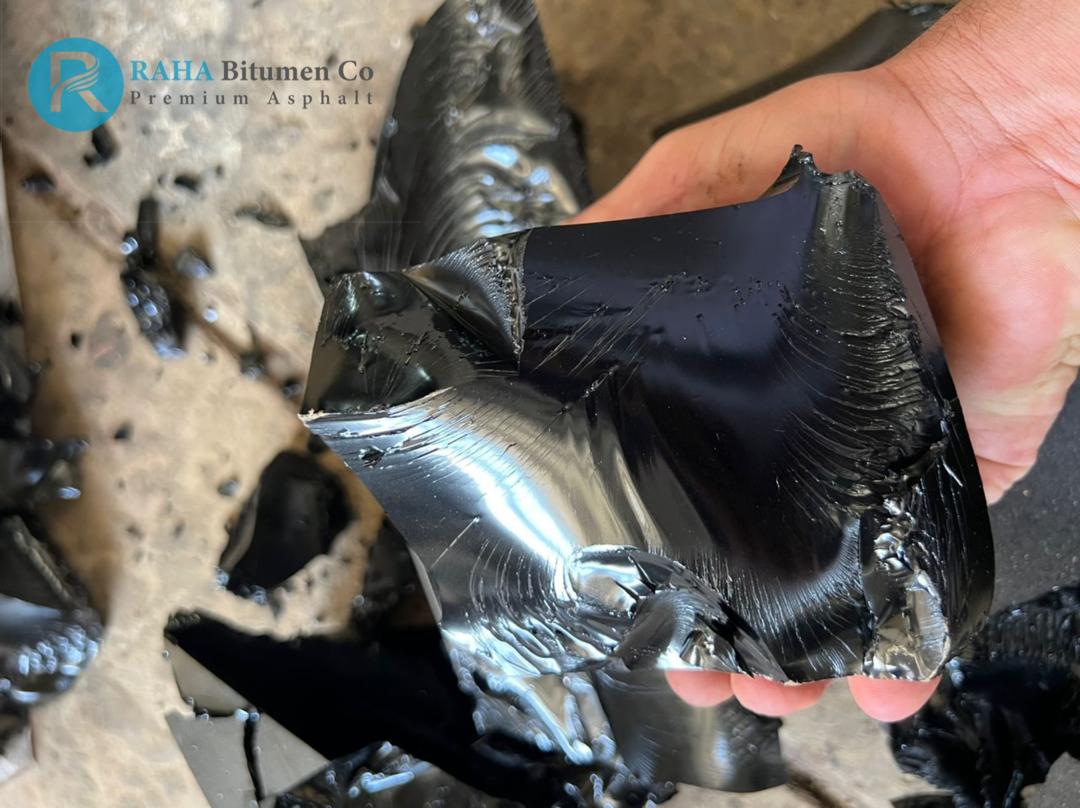
Oxidized Bitumen Battery Industry: From Lithium-Ion to the Future of Energy Storage
Bitumen battery industry applications represent one of the most exciting and fastest-growing frontiers for oxidized bitumen in the 21st century. While bitumen has been used in construction and infrastructure for centuries, cutting-edge research published in leading scientific journals — including ACS Nano, Advanced Energy Materials, and ScienceDirect — is establishing bitumen-derived carbon as a transformative material in next-generation battery technology.
The global lithium-ion battery market was valued at USD 158 billion in 2024 and is projected to reach USD 426 billion by 2033, growing at a 10.3% CAGR (MarketsandMarkets, 2025). Global lithium-ion battery demand grew 29% in 2025 alone, reaching 1.59 TWh — driven by explosive growth in electric vehicles and battery energy storage systems (Benchmark Mineral Intelligence, 2026). At the same time, the sodium-ion battery market is emerging as a major new segment, with IDTechEx projecting strong commercial growth through 2035.
In this pioneering guide, RAHA Bitumen’s research team explains how bitumen and bitumen-derived carbon materials are shaping the present and future of energy storage — from conventional underbody coatings on EV battery packs, to revolutionary asphalt-carbon anodes that could charge batteries 20 times faster than today’s technology.
The Bitumen–Battery Connection: Why Carbon Is the Key
To understand why bitumen is so valuable to the battery industry, you first need to understand carbon’s role in batteries.
In a lithium-ion battery, the anode (negative electrode) is made almost entirely of carbon — specifically graphite. When you charge a battery, lithium ions travel from the cathode through the electrolyte and insert themselves between the layers of graphite carbon at the anode. When you discharge (use the battery), those lithium ions travel back to the cathode, releasing energy. The capacity, speed, and cycle life of the battery are fundamentally determined by the quality and structure of this carbon anode.
Where does bitumen come in?
Bitumen is an extraordinarily carbon-rich material — typically containing 80–87% carbon by weight. When bitumen is pyrolyzed (heated to 800–1,400°C in the absence of oxygen), the volatile components are driven off and what remains is a highly pure, porous carbon material — variously called bitumen-derived carbon, asphalt carbon, or pitch-based hard carbon. This material has exceptional properties for battery applications:
- Ultra-high surface area: Bitumen-derived porous carbon achieves surface areas exceeding 3,000 m²/g — providing enormous surface area for lithium or sodium ion storage (ACS Nano, 2017)
- Tunable microstructure: The carbon structure (graphitization degree, pore size distribution, interlayer spacing) can be precisely controlled by adjusting pyrolysis conditions, enabling optimization for specific battery chemistries
- Abundant raw material: Bitumen is one of the world’s most available and lowest-cost carbon precursors — a critical advantage as battery manufacturing scales to TWh levels
- High carbon yield: Bitumen produces significantly higher carbon yield per kg of precursor compared to many biomass-derived carbon sources
- Consistent quality: Unlike biomass carbons which vary with source and season, petroleum-derived bitumen offers consistent chemistry and properties — essential for industrial-scale battery production
Bitumen Battery Industry Applications Today, How Bitumen Serves the Battery Industry Today
1. EV Battery Pack Underbody Protection
The most immediate and large-scale application of oxidized bitumen in the battery industry is the protection of electric vehicle battery packs. In EVs, the large flat battery pack is mounted under the vehicle floor, directly exposed to road hazards, moisture, road salt, and stone chip impact.
Oxidized bitumen-based underbody coatings and sealants protect the battery pack enclosure from:
- Corrosion of the aluminum and steel battery enclosure panels
- Stone chip and road debris impact damage
- Water ingress through seams and joints — critical since water inside a battery pack can cause short circuits
- Road salt attack in winter climates
- Noise and vibration transmission through the battery floor to the cabin
With global EV production growing at 15–20% annually and battery packs requiring 4–8 m² of underbody protection per vehicle, this represents a rapidly growing and highly consistent market for oxidized bitumen.
Recommended grades: 85/25, 90/40
2. Battery Module & Cell Sealing Compounds
Individual battery cells and modules within a battery pack must be sealed to prevent moisture ingress, electrolyte contamination, and thermal issues. Bitumen-based sealants and mastics are used at cell-to-module and module-to-pack interfaces for:
- Sealing of cell housing seams and lid joints
- Gap-filling between modules and pack floor to prevent vibration and movement
- Thermal interface management between cells and cooling plates
- Preventing electrolyte vapor migration between cells
The permanently flexible, chemically resistant nature of oxidized bitumen sealants makes them well-suited to the demanding thermal cycling environment of battery packs (typically -40°C to +80°C service range).
Recommended grades: 85/25, 90/40
3. Sound & Vibration Damping for EV Battery Floors
Electric vehicles — being silent at low speeds — make road noise far more noticeable than in conventional vehicles. Oxidized bitumen sound dampening felt applied to the interior floor pan above the battery pack is one of the most effective and cost-efficient solutions for reducing road noise and structural vibration in EVs.
This represents one of the strongest growth drivers for oxidized bitumen in the automotive sector: because EVs lack engine noise to mask road noise, the specification of acoustic materials per vehicle is significantly higher than in ICE vehicles.
→ See our dedicated page: Oxidized Bitumen Sound Dampening Felt
Recommended grades: 85/25, 90/40
The Science: Bitumen-Derived Carbon in Battery Anodes
This is where bitumen’s future in the battery industry becomes truly exciting — and where the most intensive scientific research is currently focused.
Rice University Bitumen Battery Industry Breakthrough: 20× Faster Charging
In a landmark study published in ACS Nano (the American Chemical Society’s premier nanotechnology journal), researchers at Rice University demonstrated that porous carbon derived from asphalt — combined with graphene nanoribbons and lithium metal — produced batteries with:
- High power density: 1,322 W/kg
- High energy density: 943 Wh/kg
- Charge speed: 10–20× faster than commercial lithium-ion batteries
- Exceptional cycling stability: 500+ charge-discharge cycles
- Prevention of lithium dendrite formation — the primary safety risk in lithium-metal batteries
The key to this performance was the ultra-high surface area of the asphalt-derived porous carbon (>3,000 m²/g), which ensures uniform lithium deposition on the carbon surface rather than the formation of dangerous dendrites. The researchers described asphalt-derived carbon as “an inexpensive host material” with exceptional promise for rapid-charge, high-energy batteries.
“Lithium batteries made with asphalt could charge 10 to 20 times faster than the commercial lithium-ion batteries currently available.” — Rice University / Futurity, 2017
SiOC/Asphalt Carbon Composite Anodes
Research published in Ionics journal demonstrated that silicon oxycarbide (SiOC) hybrid anodes incorporating asphalt-based carbon achieved:
- Reversible capacity of 926.8 mAh/g — more than 2.5× the capacity of standard graphite anodes (372 mAh/g)
- Capacity retention of 96.8% after 600 cycles — outstanding long-term stability
- Rate performance of 479.2 mAh/g at 5 A/g — excellent fast-charging capability
The asphalt carbon in these composites acts as a highly conductive matrix that enhances electron transport and accommodates the volume changes of SiOC during charge-discharge cycling — solving one of the key challenges of high-capacity silicon-based anodes.
The Future: Bitumen Carbon for Next-Generation Batteries
Sodium-Ion Batteries (SIBs) — The Emerging Opportunity
Sodium-ion batteries are emerging as the most promising alternative to lithium-ion technology for grid-scale energy storage. Unlike lithium, sodium is virtually unlimited in supply (seawater contains enormous quantities) and significantly cheaper. The sodium-ion battery market is projected to grow strongly through 2035 (IDTechEx, 2025).
Why bitumen carbon is ideal for sodium-ion batteries:
Standard graphite — the dominant lithium-ion anode — does not work well for sodium-ion batteries. The sodium ion is larger than lithium and cannot insert efficiently between graphite layers. Instead, sodium-ion batteries require hard carbon — a disordered, non-graphitizable carbon with wider interlayer spacing that can accommodate larger sodium ions.
Petroleum bitumen is recognized as one of the best precursors for hard carbon due to:
- High carbon content (80–87%) → high hard carbon yield
- Aromatic molecular structure that forms the ideal disordered carbon network after pyrolysis
- Tunable interlayer spacing via controlled pre-oxidation — critical for sodium storage performance
- Low cost and abundant supply — essential for grid-scale energy storage economics
Research published in Advanced Energy Materials (Wiley, 2026) demonstrated a molecular-level design strategy using asphalt-derived hard carbon with enhanced ion and electron transport for high-rate sodium-ion batteries. A separate study in ScienceDirect (2025) confirmed that waste asphalt converted to hard carbon achieved 343 mAh/g at 0.1C with 81% initial coulombic efficiency — competitive with commercial hard carbon materials at far lower cost.
ACS Applied Materials & Interfaces (2026) published research on dual-step pre-oxidation of low-softening-point pitch for sodium-ion battery hard carbon — directly referencing the type of oxidized bitumen that RAHA Bitumen produces — confirming the industrial potential of this approach.
Bottom line: As sodium-ion batteries move from laboratory to commercial production, petroleum bitumen — including oxidized bitumen — is positioned as a primary raw material for hard carbon anode manufacturing at scale.
Potassium-Ion Batteries (KIBs)
Potassium-ion batteries are an emerging battery chemistry using potassium — even more abundant than sodium — as the charge carrier. Research from the 10th International Conference on Advances in Energy and Environment Research (ICAEER 2025, Shanghai) specifically identified asphalt as a promising hard carbon precursor for potassium-ion batteries, citing its “abundant supply, high carbon content, and high utilization value.”
As with sodium-ion batteries, the key requirement is disordered hard carbon with appropriate interlayer spacing — exactly the type of carbon that bitumen pyrolysis produces.
Solid-State Batteries — The 2030 Horizon
Solid-state batteries — which replace the liquid electrolyte with a solid electrolyte — represent the next major technology transition in energy storage. In 2025, Mercedes-Benz demonstrated a solid-state EV prototype that traveled 1,205 km on a single charge, with approximately 25% more usable energy than a comparable lithium-ion pack.
Bitumen-derived carbon materials are being investigated as anode components in solid-state lithium-metal batteries, where the controlled porosity and surface chemistry of asphalt carbon helps manage the critical challenge of lithium-metal anode volume expansion — one of the key technical barriers to solid-state battery commercialization.
The Carbon Conversion Process: From Bitumen to Battery-Grade Carbon
Understanding how bitumen is transformed into battery-grade carbon helps material scientists and battery manufacturers evaluate the material’s potential.
Step 1: Bitumen Selection
- Petroleum-derived bitumen or oxidized bitumen is selected based on carbon content, softening point, and molecular structure
- Low-softening-point pitch (oxidized bitumen with softening point 85–95°C) has been specifically identified in recent research (ACS Applied Materials & Interfaces, 2026) as an excellent precursor
- Key quality parameters: carbon content (>80%), sulfur content (lower is better), ash content (lower is better)
Step 2: Pre-Oxidation (Cross-linking)
- Bitumen is heated in air at 200–300°C for controlled pre-oxidation
- This introduces oxygen-containing functional groups (C=O, C-OH) that cross-link the bitumen molecules
- Pre-oxidation prevents the bitumen from melting and flowing during subsequent high-temperature carbonization
- Controls the final degree of graphitization — more pre-oxidation → more disordered hard carbon → better sodium-ion performance
- Recent research shows that dual-step pre-oxidation (liquid-phase + solid-phase) further optimizes interlayer spacing and active sites for sodium storage
Step 3: Carbonization (Pyrolysis)
- Pre-oxidized bitumen is pyrolyzed at 800–1,400°C in an inert atmosphere (nitrogen or argon)
- Volatile components are driven off; the carbon skeleton remains and reorganizes
- Temperature controls the graphitization degree: lower temperatures (800–1,000°C) → disordered hard carbon (ideal for Na/K-ion batteries); higher temperatures (1,200–1,400°C) → more ordered carbon (ideal for Li-ion)
- Carbon yield: approximately 50–65% of input bitumen weight
Step 4: Activation (Optional)
- KOH chemical activation can further increase surface area to >3,000 m²/g
- Steam activation creates additional micropores for enhanced ion storage
- Activation temperature and time control pore size distribution
Step 5: Heteroatom Doping (Advanced)
- Nitrogen, sulfur, or phosphorus doping of bitumen carbon creates additional electrochemical active sites
- Nitrogen-doped asphalt carbon has shown significantly improved sodium-ion storage performance in multiple 2025–2026 research publications
- Doping is achieved by mixing bitumen with nitrogen-containing compounds before pyrolysis
Bitumen Battery Industry Market Outlook 2025–2030
| Application | Status | Market Size (2025) | Growth Driver |
|---|---|---|---|
| EV Battery Pack Underbody Coating | Commercial — growing | Part of USD 2.5B underbody coating market | EV production growth 15–20%/yr |
| Battery Module Sealing | Commercial — growing | Part of automotive sealants market | Battery pack complexity increasing |
| EV Floor NVH Damping | Commercial — strong growth | Part of USD 5.44B automotive acoustics market | EV silent cabin demand |
| Li-Ion Anode Carbon | Research → early commercial | Part of USD 158B Li-ion market | Faster charging, higher capacity |
| Na-Ion Hard Carbon Anode | Scaling up — commercial by 2027–2028 | Emerging — IDTechEx 2025–2035 | Lithium scarcity, grid storage demand |
| K-Ion Battery Carbon | Research stage | Pre-commercial | Potassium abundance, low cost |
| Solid-State Battery Carbon | Advanced research | Pre-commercial (2030+ horizon) | EV range, safety requirements |
Why the Bitumen Battery Industry Is Growing
1. The Graphite Crisis Driving Bitumen Battery Industry Growth
Over 75% of global natural graphite comes from China. Geopolitical tensions, export restrictions, and supply chain fragility are driving battery manufacturers — especially in Europe, the USA, and Japan — to urgently develop alternative anode carbon sources. Petroleum bitumen, available from multiple countries and in virtually unlimited quantities, is one of the most promising alternatives.
2. The Sodium-Ion Revolution
CATL (the world’s largest battery manufacturer, with 37% global market share in 2025) has already launched commercial sodium-ion batteries. Hard carbon — ideally from bitumen precursors — is the essential anode material. As sodium-ion production scales globally through 2025–2030, demand for bitumen-derived hard carbon is projected to grow rapidly.
3. Cost Advantage at Scale
Battery manufacturing is intensely cost-competitive. Bitumen at USD 200–400/ton is dramatically cheaper than synthetic graphite (USD 8,000–20,000/ton) or battery-grade natural graphite (USD 1,500–3,000/ton). As bitumen-carbon processing technology matures, the cost advantage becomes a powerful driver of adoption.
4. Circular Economy & Sustainability
Research published in ScienceDirect (2025) demonstrated that waste asphalt — reclaimed road surface material — can be converted into high-performance hard carbon anodes for sodium-ion batteries. This circular economy pathway converts waste infrastructure material into high-value battery components — aligning with global sustainability goals and ESG requirements increasingly demanded by battery manufacturers and their automotive customers.
5. EV Production Volumes
With global EV production growing at 15–20% annually and every EV requiring bitumen-based underbody protection, sealing, and acoustic materials, the conventional (non-carbon) applications of bitumen in the battery/EV industry are themselves growing rapidly and provide a strong, immediate market foundation.
RAHA Bitumen’s Role in the Battery Industry
RAHA Bitumen (RABIT) is positioned at the intersection of two of the most important global megatrends: the energy transition and the battery revolution. We supply:
For Immediate Battery Industry Applications:
- Oxidized bitumen 85/25 and 90/40 for EV battery pack underbody coating and sealing compound manufacturers
- Oxidized bitumen for sound dampening felt — used on EV floor pans to reduce road noise in silent EVs
- Technical support for automotive OEM-grade material qualification
For Advanced Carbon/Battery Research Applications:
- Petroleum bitumen with high carbon content (>80%) suitable as carbon precursor for battery anode research and development
- Low-softening-point oxidized bitumen (85/25) — specifically referenced in recent peer-reviewed research as an excellent hard carbon precursor for sodium-ion batteries
- Consistent batch quality — essential for reproducible carbon conversion research and scale-up
- Custom grade production for research specifications
- Full documentation: TDS, MSDS, COA, carbon content analysis
📞 Contact our technical team for battery industry enquiries:
Dubai Office: +971 56 281 7292 (WhatsApp)
Email: info@rahabitumen.com
Frequently Asked Questions
How is bitumen used in lithium-ion batteries?
Bitumen is used in two ways in lithium-ion battery applications. First, as a conventional material: oxidized bitumen-based underbody coatings, sealants, and sound dampening felt protect EV battery packs from corrosion, moisture, and road noise. Second, as an advanced material: bitumen is pyrolyzed (heated to 800–1,400°C) to produce high-surface-area porous carbon used as anode material. Research at Rice University demonstrated asphalt-derived carbon anodes that charge 10–20× faster than commercial lithium-ion batteries.
Why is bitumen-derived carbon good for sodium-ion batteries?
Sodium-ion batteries require hard carbon anodes — disordered carbon with wider interlayer spacing than graphite. Petroleum bitumen, when pre-oxidized and pyrolyzed at 800–1,200°C, produces hard carbon with ideal structure for sodium ion storage. Key advantages of bitumen as a hard carbon precursor include: high carbon content (>80%), abundant supply, very low cost, consistent molecular structure, and tunable porosity. Multiple 2025–2026 research papers in Advanced Energy Materials and ACS Applied Materials & Interfaces have confirmed its performance for sodium-ion battery anodes.
What is the carbon content of oxidized bitumen?
Petroleum-derived oxidized bitumen typically contains 80–87% carbon by weight, making it one of the most carbon-rich organic materials available at industrial scale. This high carbon content, combined with bitumen’s aromatic molecular structure, makes it an excellent precursor for producing high-yield, high-performance carbon materials for battery applications.
Can waste asphalt be used to make battery carbon?
Yes. Research published in ScienceDirect (2025) demonstrated that waste asphalt (reclaimed road material) can be converted into high-performance hard carbon anodes for sodium-ion batteries — achieving 343 mAh/g capacity with 81% initial coulombic efficiency. This circular economy approach converts a waste material into a high-value battery component, significantly reducing the environmental footprint of battery manufacturing.
When will bitumen-derived carbon be commercially used in batteries?
For EV underbody protection and sealing: already commercial and growing. For sodium-ion battery hard carbon anodes: early commercial production is beginning in 2025–2027, with major scale-up expected by 2028–2030 as sodium-ion battery production expands globally. For lithium-ion anode carbon: research and development stage, with commercial applications likely in specialized high-power applications by 2027–2030. For solid-state batteries: research stage with 2030+ commercialization horizon.
What grade of oxidized bitumen is best for battery industry applications?
For EV battery pack protection and sealing: oxidized bitumen 85/25 or 90/40 — providing the optimal balance of flexibility, adhesion, and heat resistance for automotive applications. For carbon precursor applications (hard carbon production for sodium-ion batteries): low-softening-point oxidized bitumen (85/25) has been specifically referenced in recent peer-reviewed literature as providing ideal pre-oxidation characteristics for hard carbon synthesis.
Key Research References
- Raji et al., “Ultrafast Charging High Capacity Asphalt-Lithium Metal Batteries”, ACS Nano, 2017. DOI: 10.1021/acsnano.7b05874
- Xu et al., “Dual Regulation on Structure-Interface Enables Coal-Tar-Pitch-Based Hard Carbon Anodes for Sodium Ion Batteries”, Advanced Science, 2025. DOI: 10.1002/advs.202515146
- Tang et al., “Molecular-Level Design of Asphalt-Derived Hard Carbon for High-Rate Sodium-Ion Batteries”, Advanced Energy Materials, Wiley, 2026. DOI: 10.1002/aenm.202506585
- Chen et al., “Waste Asphalt-Derived Hard Carbon for Sodium-Ion Batteries”, ScienceDirect, 2025.
- Zhao, “Asphalt-Based Porous Carbon for Electrochemical Energy Storage”, ICAEER 2025 Conference, IOP Publishing, 2026.
- Benchmark Mineral Intelligence, Global Lithium-Ion Battery Demand Report, January 2026.
- IDTechEx, Sodium-Ion Batteries 2025–2035, 2025.
Summary – Bitumen Battery Industry at a Glance
| Current Applications | EV battery pack underbody coating, sealing, NVH damping |
| Emerging Applications | Li-ion & Na-ion battery carbon anodes |
| Future Applications | K-ion batteries, solid-state battery anodes |
| Key Property | 80–87% carbon content → excellent carbon precursor |
| Li-Ion Market (2024) | USD 158 billion → USD 426 billion by 2033 |
| Battery Demand Growth (2025) | +29% YoY to 1.59 TWh |
| Fastest Charging Demonstrated | 20× faster than commercial Li-ion (Rice University / ACS Nano) |
| Best Grades for Battery Use | 85/25 (automotive + carbon precursor), 90/40 (cold climate EV) |
| Available From | RAHA Bitumen – Global Supplier |
Related Products & Pages:
→ Oxidized Bitumen 85/25 — standard battery industry grade
→ Oxidized Bitumen 90/40 — cold-climate EV grade
→ Oxidized Bitumen Sound Dampening Felt — EV NVH application
→ Oxidized Bitumen Undercarriage Sealant — EV battery protection
→ Oxidized Bitumen for Waterproofing
→ Oxidized Bitumen for Roofing
→ All Oxidized Bitumen Grades
Page last updated: May 2025 | Published by RAHA Bitumen Co. (RABIT) | Dubai, UAE & Isfahan, Iran
