
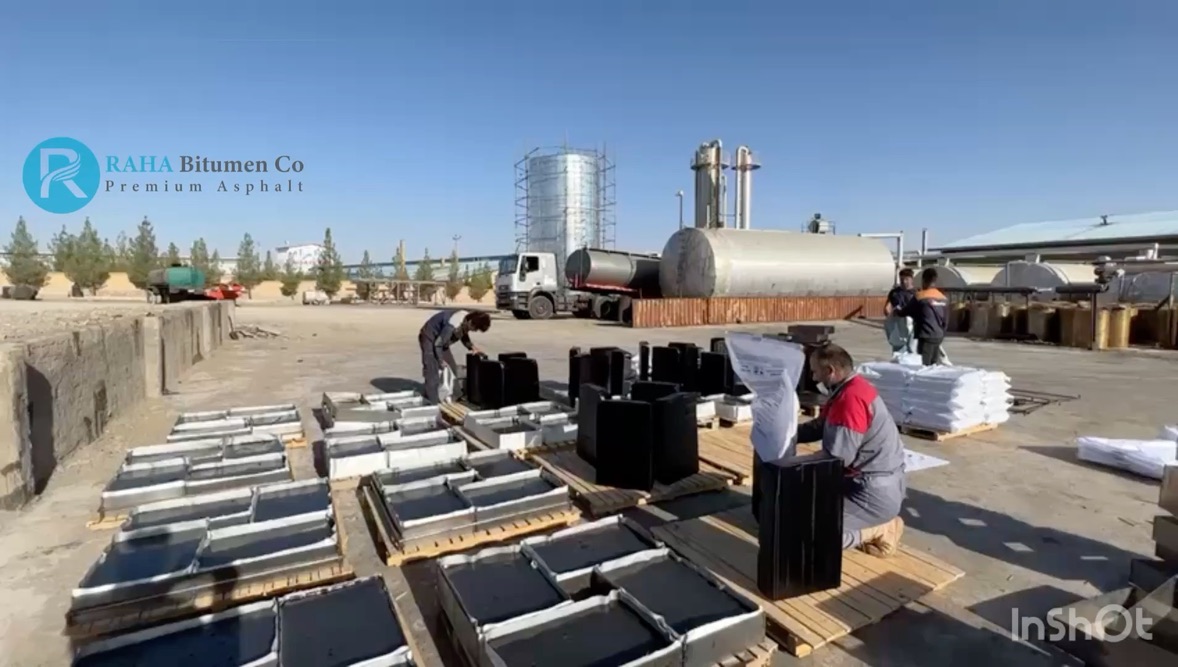
Oxidized Bitumen for Roofing: Best Grades, Applications & Installation Guide
Oxidized bitumen — also known as blown bitumen or blown asphalt — is one of the most trusted materials in the global roofing industry. Its unique combination of high softening point, superior heat resistance, and outstanding waterproofing performance makes it the preferred binder for flat roofs, low-slope membranes, roofing felts, and built-up roofing (BUR) systems worldwide.
According to a 2025 global market analysis, roofing accounts for nearly 49.5% of total bitumen membrane demand, with the built-up roofing membrane market alone valued at USD 5.26 billion in 2025 and projected to grow at 4.8% CAGR through 2032. In this guide, RAHA Bitumen’s technical team explains everything you need to know: the right grades, roofing systems, application methods, and how to select the ideal product for your project.
What Is Oxidized Bitumen and Why Is It Used in Roofing?
Oxidized bitumen is produced by passing hot air through penetration-grade bitumen at temperatures between 240°C and 300°C. This air-blowing process — called oxidation — causes a chemical reaction that increases the softening point, reduces temperature susceptibility, and creates a more rigid, rubber-like material ideal for industrial and construction use.
For roofing applications, these changes are critical:
- High softening point (85°C–155°C): The roof surface can reach extreme temperatures under direct sunlight. Standard penetration bitumen would soften and flow. Oxidized bitumen holds its shape and structure.
- Low temperature susceptibility: It performs consistently across a wide temperature range — from cold winters to tropical summers.
- Excellent waterproofing: Its dense molecular structure blocks water penetration with exceptional efficiency.
- Strong adhesion: It bonds firmly to reinforcing fabrics, felts, and substrates used in multi-layer roof systems.
In short: where standard bitumen would sag, crack, or leak under roofing conditions, oxidized bitumen delivers decades of reliable performance.
Roofing Systems That Use Oxidized Bitumen
1. Built-Up Roofing (BUR)
Built-up roofing is one of the oldest and most proven flat-roof systems. It consists of alternating layers of oxidized bitumen and reinforcing fabrics (fiberglass or polyester felt), finished with a protective cap layer of mineral granules or gravel.
How oxidized bitumen is used in BUR:
- As the hot-mopped adhesive between felt plies
- As the waterproofing binder bonding each layer together
- As the base coat applied directly to the roof deck
BUR systems using oxidized bitumen are known to last 20–30 years with proper maintenance, making them one of the most cost-effective long-term roofing solutions available.
Recommended grades: 85/25, 90/40, 95/25
2. Roofing Felt Manufacturing
Roofing felt (also called bitumen felt or sarking felt) is a flexible sheet material manufactured by saturating or coating a fibrous base (polyester or fiberglass mat) with oxidized bitumen. It is used as:
- An underlayer beneath roofing tiles and shingles
- A base sheet in multi-ply membrane systems
- A waterproofing layer on low-slope and flat roofs
The high softening point and strong bonding ability of oxidized bitumen make it the standard raw material for roofing felt production globally.
Recommended grades: 85/25, 90/40, 115/15
3. Modified Bitumen Roofing Membranes (APP & SBS)
Modified bitumen membranes — the most widely used roofing membrane type worldwide — use oxidized bitumen as their primary base material, further enhanced with polymers:
- APP membranes (Atactic Polypropylene): Oxidized bitumen blended with APP polymer. Excellent UV and heat resistance. Torch-applied or self-adhesive.
- SBS membranes (Styrene-Butadiene-Styrene): Oxidized bitumen blended with SBS rubber. Excellent flexibility in cold temperatures. Torch-applied or cold-adhesive.
The global modified bitumen roofing market was valued at USD 8.95 billion in 2023 and is projected to reach USD 14.1 billion by 2032 at a 5.7% CAGR (Valuates Reports, 2025). Oxidized bitumen is the essential raw material at the heart of this growth.
Recommended grades: 115/15, 95/25, 85/25
4. Hot-Applied Waterproofing Layers
Oxidized bitumen is melted and applied directly as a seamless hot liquid coating over roof surfaces, providing a monolithic waterproofing layer with no joints or seams — the main source of roof leaks.
This application method is widely used in:
- Flat commercial and industrial roofs
- Roof terraces and walkable roof decks
- Roof areas around penetrations and drains
Recommended grades: 85/25, 90/40, 95/25
5. Asphalt Shingle Underlayment
Oxidized bitumen is used as a thin membrane beneath asphalt shingle roofing as secondary protection against water ingress. It also serves as a raw material in manufacturing the shingles themselves.
Best Oxidized Bitumen Grades for Roofing – Comparison Table
Choosing the right grade is the most critical decision in any roofing project. Each grade is identified by two numbers: the first is the softening point (°C), and the second is the penetration value (dmm). Higher softening point = more heat resistant. Lower penetration = harder material.
| Grade | Softening Point | Penetration | Best Roofing Use |
|---|---|---|---|
| 85/25 | ~85°C | ~25 dmm | Hot-applied roof mastics, BUR systems, waterproofing boards, roofing membranes in temperate climates |
| 90/40 | ~90°C | ~40 dmm | BUR systems requiring flexibility, roofing in regions with thermal cycling, base layers |
| 95/25 | ~95°C | ~25 dmm | Roofing felts, waterproofing membranes, mid-to-high temperature environments |
| 105/35 | ~105°C | ~35 dmm | Heavy-duty industrial roofs, wide-temperature-range applications |
| 115/15 | ~115°C | ~15 dmm | Hot-climate roofing, APP membrane production, tropical regions, high-performance systems |
| 150/5 | ~150°C | ~5 dmm | Extreme-heat roofing applications, specialty industrial roofs |
Quick Selection Rule:
- Temperate climate (Europe, mild Asia): 85/25 or 90/40
- Hot & tropical climate (Africa, Middle East, South/SE Asia): 95/25 or 115/15
- Membrane manufacturing: 115/15 or 95/25
- BUR systems: 85/25 or 90/40
Key Properties That Make Oxidized Bitumen Superior for Roofing
1. High Softening Point
Standard penetration bitumen softens at 40–60°C. Oxidized bitumen grades start at 85°C and reach 155°C. This prevents sagging, flow, and deformation on sun-exposed roof surfaces — critical in hot climates.
2. Superior Waterproofing
The dense, gel-like molecular structure formed during oxidation creates an almost impermeable barrier to water. Oxidized bitumen is fully waterproof and resists hydrostatic pressure effectively.
3. Excellent Adhesion
It bonds strongly to polyester and fiberglass reinforcement materials, concrete, masonry, and metal — making it ideal for multi-layer roofing systems that must stay bonded over decades.
4. Chemical and Weather Stability
Oxidized bitumen resists chemical attack, UV degradation (when protected), freeze-thaw cycling, and biological growth — ensuring long service life even in harsh environments.
5. Wide Temperature Range Performance
Its high Penetration Index (PI between +2 and +8) means it maintains performance across a broad temperature range — essential for roofs that experience both summer heat and winter cold.
6. Long Service Life
BUR and membrane roof systems built with quality oxidized bitumen regularly achieve 20–30 year service lives, far exceeding many alternative materials when correctly installed and maintained.
Oxidized Bitumen Roofing Installation – How It’s Applied
Hot Mopping (BUR Systems)
The most traditional method. Oxidized bitumen is heated to its application temperature (220°C–230°C) and mopped or poured over the surface in liquid form, with felt plies embedded while hot. Each layer is applied while the previous one is still hot for maximum bonding.
Important: Always heat slowly to avoid overheating. Never exceed 260°C.
Torch Application (Modified Membrane)
Pre-manufactured membrane rolls containing oxidized bitumen are unrolled over the surface while a propane torch heats the underside, melting the bitumen and bonding it to the substrate. This is the most common method for modified bitumen membranes today.
Cold Application / Self-Adhesive
Some oxidized bitumen membrane products are designed for cold application using solvent-based adhesives or self-adhesive backing. These are growing in popularity due to safety advantages (no open flame), especially on occupied buildings.
How to Choose the Right Oxidized Bitumen Grade for Your Roof
Use this step-by-step decision process:
Step 1 – Identify your climate:
Hot/tropical → choose higher softening point (95/25, 115/15)
Temperate/cold → choose lower softening point (85/25, 90/40)
Step 2 – Identify your roofing system:
- BUR system → 85/25 or 90/40
- Felt manufacturing → 85/25, 90/40, or 115/15
- APP membrane production → 115/15
- Hot-applied waterproofing → 85/25 or 95/25
Step 3 – Consider roof type:
- Flat commercial roof → 95/25 or 115/15
- Low-slope residential → 85/25 or 90/40
- Industrial high-heat roof → 115/15 or 150/5
Step 4 – Verify packaging and supply:
- Project-scale quantities → 25kg meltable polyamide bags or carton boxes
- Large production orders → bulk delivery or drums
Why Source Oxidized Bitumen from RAHA Bitumen for Roofing Projects?
RAHA Bitumen (RABIT) has supplied oxidized bitumen to roofing manufacturers, contractors, and distributors in over 100 countries since 2012. Our roofing-grade oxidized bitumen offers:
- Pure air-blown production — no gilsonite or fillers added
- ASTM standard compliance — verified by SGS and international third-party inspectors
- Consistent grade stability across production batches
- Full TDS and MSDS documentation for every grade
- Multiple packing options: 25kg meltable polyamide bags, kraft bags, 200L drums, bulk
- Fast delivery from our Isfahan, Iran facility via Dubai, UAE hub to worldwide destinations
- Available grades for roofing: 75/25, 85/25, 85/40, 90/40, 95/25, 105/35, 115/15, 150/5
📞 Contact our roofing specialists:
Dubai Office: +971 56 281 7292 (WhatsApp)
Email: info@rahabitumen.com
Frequently Asked Questions
What grade of oxidized bitumen is best for flat roofs?
For flat roofs in hot climates, oxidized bitumen 95/25 or 115/15 is recommended due to their high softening points, which prevent flow and sagging under direct sun exposure. In temperate climates, 85/25 or 90/40 provide an excellent balance of flexibility and heat resistance.
What is the difference between oxidized bitumen and modified bitumen for roofing?
Oxidized bitumen is the base material produced by air-blowing penetration bitumen. Modified bitumen takes oxidized bitumen a step further by blending it with APP or SBS polymers, adding enhanced flexibility and UV resistance. Modified bitumen membranes use oxidized bitumen as their primary raw material.
Can oxidized bitumen be used for residential roofing?
Yes. Oxidized bitumen is used in roofing felt underlayers beneath tiles and shingles on residential roofs, as well as in flat-roof waterproofing systems for residential buildings. Grade 85/25 and 90/40 are most common for residential applications.
What is the application temperature for oxidized bitumen in roofing?
Oxidized bitumen should be heated slowly to an application temperature of 220°C to 230°C for roofing systems. It should never be overheated beyond 260°C, as this can cause degradation of the material’s properties.
How long does an oxidized bitumen roof last?
A properly installed built-up roofing (BUR) system or modified bitumen membrane using quality oxidized bitumen typically lasts 20 to 30 years, depending on climate conditions, maintenance, and installation quality.
What is the difference between blown bitumen 85/25 and 115/15 for roofing?
85/25 has a softening point of ~85°C and is suitable for temperate climate roofing, BUR systems, and general waterproofing. 115/15 has a much higher softening point (~115°C) with lower penetration, making it ideal for hot-climate roofing, APP membrane production, and high-performance industrial roof systems.
Is oxidized bitumen the same as blown asphalt?
Yes. Oxidized bitumen, blown bitumen, blown asphalt, and hard bitumen all refer to the same material — penetration-grade bitumen that has been treated by air-blowing to increase its softening point and reduce temperature sensitivity.
Summary – Oxidized Bitumen Roofing at a Glance
| Primary Use | BUR systems, roofing felts, waterproofing membranes |
| Top Grades | 85/25, 90/40, 95/25, 115/15 |
| Application Temp | 220°C – 230°C |
| Expected Roof Life | 20–30 years |
| Climate Suitability | All climates (grade selection varies) |
| Standards | ASTM D312, BS 3690 |
| Available From | RAHA Bitumen – Global Supplier |
Page last updated: May 2025 | Published by RAHA Bitumen Co. (RABIT) | Dubai, UAE & Isfahan, Iran
