
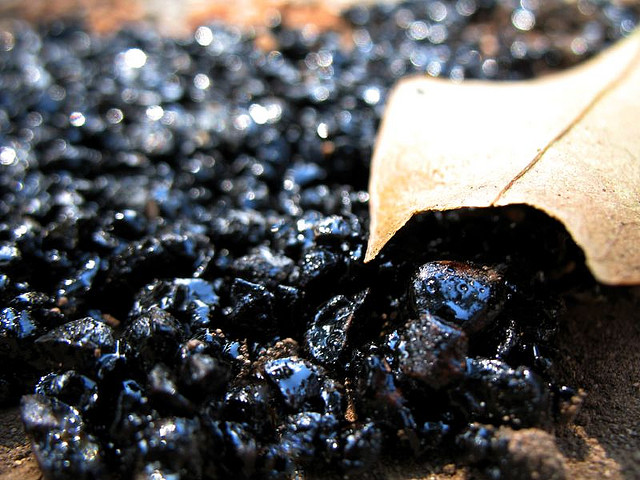
Bitumen is the most widely used binder in road construction, waterproofing and industrial applications. Different bitumen types. Bitumen has a number of applications but its use for construction and maintenance of roads either directly or through asphalt accounts for nearly 90% of all demand.
Key bitumen types for road applications including paving grades, cutback bitumen, and bitumen emulsions.
What is Types of Bitumen?
Bitumen is a viscous, black hydrocarbon binder obtained from crude oil refining. It provides adhesion, waterproofing and flexibility in construction materials.Variations in processing and formulation create different bitumen types with distinct properties like hardness, temperature susceptibility, and resistance to deformation.
The Classified Bitumen Types
There are different types of bitumen available with different properties, specifications and uses based on requirements of consuming industry. The specification of bitumen also shows variation with the safety, solubility, physical properties, and the durability.
The bitumen types regarding its generation source bitumen can be classified into three categories: natural, petroleum asphalts, coal tar pitches:
- Natural bitumen or native asphalts: a class of bitumen which have been naturally produced due to climate conditions in the course of time, and are used without the need to be processed in distillation ways; they are very varied regarding their composition and properties.
- Coal tar Pitches: a hard black substances which are formed as the result of coal tar distillation. Their new broken surface is shiny and when they are heated they, along with a fast decrease in viscosity, melt, and their melting point depends on the production process.
- Petroleum Asphalts: the bitumen which is derived from petroleum. These are solid and semi-solid bitumen which is directly produced through distillation from petroleum or by additional operations such as air blowing. Compared with the other types, they are more commonly used and have more applications.
Main Bitumen Types & Grades
Main bitumen types are as follow:
Bitumen Penetration Grade
Bitumen Penetration Grade is classified by the depth to which a standard needle will penetrate under specified test conditions. This “pen” test classification is used to indicate the hardness of bitumen, lower penetration indicating a harder bitumen. Specifications for penetration graded bitumens normally state the penetration range for a grade, e.g. 60/70.
Main Grades of Penetration
Oxidized Bitumen
Passing air through bitumen at elevated temperature can be used to alter its physical properties for certain commercial applications. The degree of oxidation can range from very small, often referred to as air-rectification, or semi-blowing, which only slightly modifies the bitumen properties, through to “full” blowing, whereby the properties of the bitumen are significantly different to penetration grade bitumen. Nomenclature and grading for the oxidized bitumen products are based on a combination of the temperature at which the bitumen reaches certain “softness” when being heated up as expressed by the ring and ball softening point test, and the penetration value. Eurobitume has published a paper clarifying the criteria used to differentiate between air-rectified bitumen and oxidized bitumen.
Oxidized Grades
Performance Grade Bitumen (PG)
PG is the latest standard of the day. This relatively new method classified bitumen is based on varying temperatures. It is a fully scientific method studying the mechanical specifications of bitumen. In this method, a temperature range is defined for bitumen and the consumer can easily choose the desired product.
Grades
Viscosity Grade (VG)
Viscosity Grade Bitumen (VG) is graded based on absolute viscosity at 60 ºC or a kinematic viscosity at 135 ºC. The SI physical unit of dynamic viscosity is Poise and kinematic viscosity is expressed in Centistokes. Specifications for viscosity graded bitumen normally give the nominal viscosity.
Polymer Modified Bitumen (PMB)
Polymer modified bitumen (PMB) are mixtures produced from: bitumen polymers in which the polymers change the visco-elastic behavior of the bitumen and thus make this binder more suitable for different stresses.
The most commonly used polymer for bitumen modification is styrene–butadiene–styrene (SBS) followed by other polymers such as styrene–butadiene–rubber (SBR), ethylene-vinyl-acetate (EVA), and polyethylene. SBS block copolymers are classified as elastomers that increase the elasticity of bitumen. Although polymer modified bitumen costs higher than pure bitumen, they are considered to be more economical because of economic benefits of lower costs of road repairs.
PMB Grades
What Are the Bitumen Production Processes?
Bitumen is usually acquired from petroleum distillation. Such kind of bitumen is called petroleum asphalt or distillery bitumen. Petroleum bitumen is the product of two stages of petroleum distillation in a distillation tower. In the first stage of distillation, light materials such as gasoline and propane are separated from the raw oil. This process is done in the pressure close to atmospheric pressure. In second stage heavy compounds such as diesel oil and kerosene are extracted. This process is done at a pressure close to vacuum pressure. Finally, a mixture of solid bits called asphaltene remains which are floated in a grease-like fluid called Malton.
Some kinds of bitumen are acquired from nature by gradual changing of petroleum and the evaporation of its evaporating materials by passing many years, such kind of bitumen is called natural bitumen, and it is more lasting than petroleum asphalts. Such bitumen may be found in nature in pure form (lake bitumen) or extracted from mines (mineral bitumen).
- Blown Bitumen
Blown asphalt comes from hot air blown to pure bitumen in the last stage of refining. In this process, hot air having 200-300 degree centigrade temperature is blown to bitumen container with porous tubes. In this process, hydrogen atoms in bitumen hydrocarbon are combined with oxygen in the air and by forming water, polymerization happens. Compared with pure bitumen, blown bitumen has a low penetration rate and a high softness point. This kind of bitumen is used in making roof sheets, automobile battery, and coating. - Mixed or Solution Bitumen
Mixed bitumen is a term used to refer to a mixture of bitumen and a suitable liquid (for example kerosene or gasoline). This bitumen in normal environment temperature is liquid or is changed to liquid with a little heat. Mixed bitumen is used in different kinds of macadam and coating asphalts. The speed of its clotting or hardening depends on the kind of liquid. For example, because of the high speed of gasoline evaporation, bitumen solved in gasoline hardens faster. This bitumen is called rapid clotting (RC) bitumen. The bitumen solved in kerosene is called mild clotting (MC) bitumen and those solved in gas oil or fuel oil is called slow clotting (SC). Liquid bitumen is classified according to their viscosity rate. - Emulsion Bitumen
Emulsion bitumen is produced by mixing bitumen, water, and an emulsion making material. The emulsion making material is usually alkali salt of an organic acid or ammonium salt which charges bitumen particles. So the bitumen particles expel each other because of their induction charges and float in the form of balls having one hundredth to one thousandth millimeter diameter. The use of such kind of bitumen decreases environment pollution and as oil or flammable solvents aren’t used the danger of flaming during transportation is decreased.
Application of Bitumen types in Different Industries
Bitumen has a number of applications but its use for construction and maintenance of roads either directly or through asphalt accounts for nearly 90% of all demand. Key bitumen types for road applications including paving grades, cutback bitumen, and bitumen emulsions. Hard, oxidized, and blown grades and mastic asphalt are used for paints, sealants, adhesives, enamels, waterproofing, electrical products, flooring materials, back carpet tiles, land and marine pipe coatings and numerous other non-road applications. Polymer-modified bitumen (PMB) is a recent innovation that is finding growing application in both paving and non-road applications. Although there are numerous non-road applications for bitumen, they consume small volumes and road paving is the primary application. As a result, infrastructure cuts have significantly impacted global bitumen demand.
